OFF THE WIRE
AB 953, as amended, Weber. Law enforcement: racial profiling.
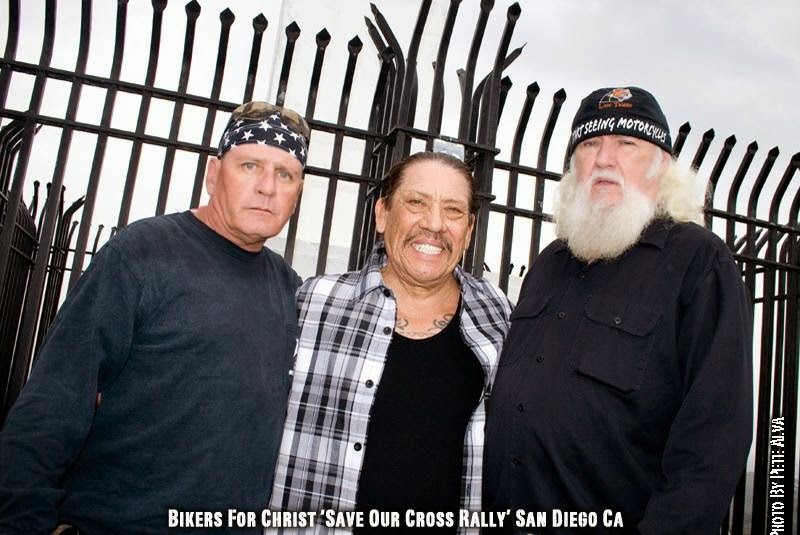
I believe AB 953 covers motorcycle clubs under identity= stopping an
individual because the person is identified as a sub culture with in the
considered norm culture is identity profiling, Being stopped by a
police officer strictly because of your culture, race, or specific
apparel and not for breaking a specific law but because said police
officer is biased and out of ignorance generalizes you as part of a
motorcycle club, sub culture , or specific race that he wrongfully
believes is more prone to breaking the law and then uses that prejudice
to stop you and hinder your right of free movement is identity
profiling.
AMENDED IN SENATE JUNE 30, 2015
AMENDED IN ASSEMBLY JUNE 01, 2015
AMENDED IN ASSEMBLY APRIL 16, 2015
AMENDED IN ASSEMBLY MARCH 26, 2015
CALIFORNIA LEGISLATURE— 2015–2016 REGULAR SESSION
ASSEMBLY BILL
No. 953
Introduced by Assembly Member Weber
(Coauthor: Assembly Member Bonta)(Coauthor: Senator Mitchell)
February 26, 2015
An act to add Section 12525.5 to the Government Code, and to amend
Sections 13012 and 13519.4 of the Penal Code, relating to racial
profiling.
LEGISLATIVE COUNSEL'S DIGEST
AB 953, as amended, Weber. Law enforcement: racial profiling.
Existing law creates the Commission on Peace Officer Standards and
Training and requires it to develop and disseminate guidelines and
training for all law enforcement officers, as described. Existing law
prohibits a law enforcement peace officer from engaging in racial
profiling and requires the training prescribe patterns, practices, and
protocols that prevent racial profiling, as defined. Existing law
requires the Legislative Analyst’s Office to conduct a study of the data
that is voluntarily collected by jurisdictions that have instituted a
program of data collection with regard to racial profiling.
This
bill, which would be known as would enact the Racial and Identity
Profiling Act of 2015, which would, among other changes, revise the
definition of racial profiling to instead refer to racial or identity
profiling, would and make a conforming change to the prohibition against
law enforcement peace officers engaging in that practice, and would
make the prohibition specifically applicable to probation and parole
officers. practice. The bill would also require a law enforcement peace
officer who is the subject of a complaint of racial or identity
profiling that is sustained to participate in training to correct racial
and identity profiling at least every 6 months for 2 years, starting
from the date a complaint is found to have been sustained.
The bill
would require, beginning July 1, 2016, the Attorney General to establish
the Racial and Identity Profiling Advisory Board (RIPA) to eliminate
racial and identity profiling and improve diversity and racial and
identity sensitivity in law enforcement. The bill would specify the
composition of the board. The bill would require the board, among other
duties, to investigate and analyze state and local law enforcement
agencies’ racial and identity profiling policies and practices, to
annually make publicly available its findings and recommendations, to
hold public meetings annually, as specified, and to issue the board’s
first annual report no later than January 1, 2018.
The bill would
require each state and local agency that employs peace officers to
annually report to the Attorney General on or before March 1, 2018, and
each March 1 thereafter, data on all stops, as defined, conducted by the
agency’s peace officers, and require that data to include specified
information, including the time, date, and location of the stop, and the
reason for the stop. The bill would require the agencies to retain that
data for a minimum of 5 years. The bill would also require the Attorney
General to analyze the data collected, report its findings from the
first analysis by January 1, 2019, issue reports each January 1,
thereafter, and make the reports available to the public by posting them
on the Department of Justice’s Internet Web site.
By imposing a
higher level of service on local entities that employ peace officers,
the bill would impose a state-mandated local program.
The California
Constitution requires the state to reimburse local agencies and school
districts for certain costs mandated by the state. Statutory provisions
establish procedures for making that reimbursement.
This bill would
provide that, if the Commission on State Mandates determines that the
bill contains costs mandated by the state, reimbursement for those costs
shall be made pursuant to these statutory provisions.
Digest Key
Vote: majority Appropriation: no Fiscal Committee: yes Local Program: yes
Bill Text
THE PEOPLE OF THE STATE OF CALIFORNIA DO ENACT AS FOLLOWS:
SECTION 1.
This act shall be known and may be cited as the Racial and Identity Profiling Act of 2015.
SEC. 2.
Section 12525.5 is added to the Government Code, to read:
12525.5.
(a) Each state and local agency that employs peace officers shall
annually report to the Attorney General data on all “stops,” as defined
in subdivision (j), conducted by that agency’s peace officers for the
preceding calendar year. Each agency’s annual report shall be submitted
to the Attorney General no later than March 1 of the following calendar
year. The first round of the annual reports shall be issued on or before
March 1, 2018.
(b) The reporting shall include, at a minimum, the following information for each stop:
(1) The time, date, and location of the stop.
(2) The reason for the stop.
(3) The result of the stop, such as, no action, warning, citation, property seizure, or arrest.
(4) If a warning or citation was issued, the warning provided or violation cited.
(5) If an arrest was made, the offense charged.
(6) The perceived race or ethnicity, gender, and approximate age of the
person stopped, provided that the identification of these
characteristics shall be based on the observation and perception of the
peace officer making the stop, and the information shall not be
requested from the person stopped. For motor vehicle stops, this
paragraph only applies to the driver, unless any actions specified under
paragraph (7) apply in relation to a passenger, in which case the
characteristics specified in this paragraph shall also be reported for
him or her.
(7) Actions taken by the peace officer during the stop, including, but not limited to, the following:
(A) Whether the peace officer asked for consent to search the person, and, if so, whether consent was provided.
(B) Whether the peace officer searched the person or any property, and
and, if so so, the basis for the search, search and the type of
contraband or evidence discovered, if any.
(C) Whether the peace
officer seized any property and, if so, the type of property that was
seized and the basis for seizing the property.
(c) If more than one
peace officer performs a stop, only one officer is required to collect
and report to his or her agency the information specified under
subdivision (b).
(d) State and local law enforcement agencies shall
not report the name, address, social security number, or other unique
personal identifying information of persons stopped, searched, or
subjected to a property seizure, for purposes of this section.
Notwithstanding any other law, the data reported shall be available to
the public, except for the badge number or other unique identifying
information of the peace officer involved, which shall be released to
the public only to the extent the release is permissible under state
law.
(e) Not later than January 1, 2017, the Attorney General, in
consultation with stakeholders, including the Racial and Identity
Profiling Advisory Board (RIPA) established pursuant to paragraph (1) of
subdivision (j) of Section 13519.4 of the Penal Code, federal, state,
and local law enforcement agencies and community, professional,
academic, research, and civil and human rights organizations, shall
issue regulations for the collection and reporting of data required
under subdivision (b). The regulations shall specify all data to be
reported, and provide standards, definitions, and technical
specifications to ensure uniform reporting practices across all
reporting agencies. To the best extent possible, such regulations should
be compatible with any similar federal data collection or reporting
program.
(f) Each year, on an annual basis, each state and local law
enforcement agency shall make publicly available a report that lists
the agency’s total results for each data collection criteria required
under subdivision (b). The reports shall include the data collected
during the preceding calendar year. The first round of the annual
reports shall be issued by each agency on or before July 1, 2018. The
Attorney General, in consultation with RIPA, shall determine the form in
which agencies make the information publicly available. Each state and
local law enforcement agency shall post the reports on the Internet Web
site for that agency, or, if an agency does not have an Internet Web
site, the Department of Justice shall post the agency’s reports on its
Internet Web site.
(g) Data reported pursuant to this section shall be retained by the reporting agency for a minimum of five years.
(h) Each year, on an annual basis, the Attorney General shall analyze
the data collected. The Attorney General shall report its findings from
the first analysis by January 1, 2019, and shall issue reports on the
first day of each January thereafter. The reports shall be available to
the public by posting those reports on the Department of Justice’s
Internet Web site.
(i) All data and reports made pursuant to this
section are public records within the meaning of subdivision (e) of
Section 6252, and are open to public inspection pursuant to Sections
6253 and 6258.
(j) (1) For purposes of this section, “peace
officer,” as defined in Chapter 4.5 (commencing with Section 830) of
Title 3 of Part 2 of the Penal Code, is limited to members of the
California Highway Patrol, a city or county law enforcement agency,
except probation officers and officers in a custodial setting, agency,
and California state or university educational institutions. “Peace
officer,” as used in this section, does not include probation officers
and officers in a custodial setting.
(2) For purposes of this
section, “stop” means any detention by a peace officer of a person, or
any peace officer interaction with a person in which the peace officer
conducts a search, including a consensual search, of the person’s body
or property in the person’s possession or control.
SEC. 3.
Section 13012 of the Penal Code is amended to read:
13012.
(a) The annual report of the department provided for in Section 13010 shall contain statistics showing all of the following:
(1) The amount and the types of offenses known to the public authorities.
(2) The personal and social characteristics of criminals and delinquents.
(3) The administrative actions taken by law enforcement, judicial,
penal, and correctional agencies or institutions, including those in the
juvenile justice system, in dealing with criminals or delinquents.
(4) The administrative actions taken by law enforcement, prosecutorial,
judicial, penal, and correctional agencies, including those in the
juvenile justice system, in dealing with minors who are the subject of a
petition or hearing in the juvenile court to transfer their case to the
jurisdiction of an adult criminal court or whose cases are directly
filed or otherwise initiated in an adult criminal court.
(5) (A) The total number of each of the following:
(i) Citizen complaints received by law enforcement agencies under Section 832.5.
(ii) Citizen complaints alleging criminal conduct of either a felony or misdemeanor.
(iii) Citizen complaints alleging racial or identity profiling, as
defined in subdivision (e) of Section 13519.4. These statistics shall be
disaggregated by the specific type of racial or identity profiling
alleged, such as based on a consideration of race, color, ethnicity,
national origin, religion, gender identity or expression, sexual
orientation, or mental or physical disability.
(B) The statistics
reported under this paragraph shall provide, for each category of
complaint identified under subparagraph (A), the number of complaints
within each of the following disposition categories:
(i)
“Sustained,” which means that the investigation disclosed sufficient
evidence to prove the truth of allegation in the complaint by
preponderance of evidence.
(ii) “Exonerated,” which means that the
investigation clearly established that the actions of the personnel that
formed the basis of the complaint are not a violation of law or agency
policy.
(iii) “Not sustained,” which means that the investigation
failed to disclose sufficient evidence to clearly prove or disprove the
allegation in the complaint.
(iv) “Unfounded,” which means that the investigation clearly established that the allegation is not true.
(C) The reports under subparagraphs (A) and (B) shall be made available
to the public and disaggregated for each individual law enforcement
agency.
(b) It shall be the duty of the department to give adequate
interpretation of the statistics and so to present the information that
it may be of value in guiding the policies of the Legislature and of
those in charge of the apprehension, prosecution, and treatment of the
criminals and delinquents, or concerned with the prevention of crime and
delinquency. The report shall also include statistics which are
comparable with national uniform criminal statistics published by
federal bureaus or departments heretofore mentioned.
(c) Each year,
on an annual basis, the Racial and Identity Profiling Board (RIPA),
established pursuant to paragraph (1) of subdivision (j) of Section
13519.4, shall analyze the statistics reported pursuant to subparagraphs
(A) and (B) of paragraph (5) of subdivision (a) of this section. RIPA’s
analysis of the complaints shall be incorporated into its annual report
as required by paragraph (3) of subdivision (j) of Section 13519.4. The
reports shall not disclose the identity of peace officers.
SEC. 4.
Section 13519.4 of the Penal Code is amended to read:
13519.4.
(a) The commission shall develop and disseminate guidelines and
training for all peace officers in California as described in
subdivision (a) of Section 13510 and who adhere to the standards
approved by the commission, on the racial and cultural differences among
the residents of this state. The course or courses of instruction and
the guidelines shall stress understanding and respect for racial,
identity, and cultural differences, and development of effective,
noncombative methods of carrying out law enforcement duties in a diverse
racial, identity, and cultural environment.
(b) The course of basic
training for peace officers shall include adequate instruction on
racial, identity, and cultural diversity in order to foster mutual
respect and cooperation between law enforcement and members of all
racial, identity, and cultural groups. In developing the training, the
commission shall consult with appropriate groups and individuals having
an interest and expertise in the field of racial, identity, and cultural
awareness and diversity.
(c) For the purposes of this section the following shall apply:
(1) “Disability,” “gender,” “nationality,” “religion,” and “sexual orientation” have the same meaning as in Section 422.55.
(2) “Culturally diverse” and “cultural diversity” include, but are not
limited to, disability, gender, nationality, religion, and sexual
orientation issues.
(3) “Racial” has the same meaning as “race or ethnicity” in Section 422.55.
(4) “Stop” has the same meaning as in paragraph (2) of subdivision (j) of Section 12525.5 of the Government Code.
(d) The Legislature finds and declares as follows:
(1) The working men and women in California law enforcement risk their
lives every day. The people of California greatly appreciate the hard
work and dedication of peace officers in protecting public safety. The
good name of these officers should not be tarnished by the actions of
those few who commit discriminatory practices.
(2) Racial or
identity profiling is a practice that presents a great danger to the
fundamental principles of our Constitution and a democratic society. It
is abhorrent and cannot be tolerated.
(3) Racial or identity
profiling alienates people from law enforcement, hinders community
policing efforts, and causes law enforcement to lose credibility and
trust among the people whom law enforcement is sworn to protect and
serve.
(4) Pedestrians, users of public transportation, and
vehicular occupants who have been stopped, searched, interrogated, and
subjected to a property seizure by a peace officer for no reason other
than the color of their skin, national origin, religion, gender identity
or expression, housing status, sexual orientation, or mental or
physical disability are the victims of discriminatory practices.
(5)
It is the intent of the Legislature in enacting the changes to this
section made by the act that added this paragraph that additional
training is required to address the pernicious practice of racial or
identity profiling and that enactment of this section is in no way
dispositive of the issue of how the state should deal with racial or
identity profiling.
(e) “Racial or identity profiling,” for purposes
of this section, is the consideration of, or reliance on, to any
degree, actual or perceived race, color, ethnicity, national origin,
age, religion, gender identity or expression, sexual orientation, or
mental or physical disability in deciding which persons to subject to a
stop or in deciding upon the scope or substance of law enforcement
activities following a stop. stop, except that an officer may consider
or rely on characteristics listed in a specific suspect description. The
activities include, but are not limited to, traffic or pedestrian
stops, or actions during a stop, such as asking questions, frisks,
consensual and nonconsensual searches of a person or any property,
seizing any property, removing vehicle occupants during a traffic stop,
issuing a citation, and making an arrest.
(f) A peace officer shall not engage in racial or identity profiling.
(g) Every peace officer in this state shall participate in expanded
training as prescribed and certified by the Commission on Peace Officers
Standards and Training.
(h) The curriculum shall be evidence-based
and shall include and examine evidence-based patterns, practices, and
protocols that make up racial or identity profiling, including implicit
bias. This training shall prescribe evidenced-based patterns, practices,
and protocols that prevent racial or identity profiling. In developing
the training, the commission shall consult with the Racial and Identity
Profiling Advisory Board established pursuant to subdivision (j). The
course of instruction shall include, but not be limited to, significant
consideration of each of the following subjects:
(1) Identification
of key indices and perspectives that make up racial, identity, and
cultural differences among residents in a local community.
(2)
Negative impact of intentional and implicit biases, prejudices, and
stereotyping on effective law enforcement, including examination of how
historical perceptions of discriminatory enforcement practices have
harmed police-community relations and contributed to injury, death,
disparities in arrest detention and incarceration rights, and wrongful
convictions.
(3) The history and role of the civil and human rights movement and struggles and their impact on law enforcement.
(4) Specific obligations of peace officers in preventing, reporting,
and responding to discriminatory or biased practices by fellow peace
officers.
(5) Perspectives of diverse, local constituency groups and
experts on particular racial, identity, and cultural and
police-community relations issues in a local area.
(6) The prohibition against racial or identity profiling in subdivision (f).
(i) Once the initial basic training is completed, each peace officer in
California as described in subdivision (a) of Section 13510 who adheres
to the standards approved by the commission shall be required to
complete a refresher course every five years thereafter, or on a more
frequent basis if deemed necessary, in order to keep current with
changing racial, identity, and cultural trends. In addition to any
remedies provided in law or equity, any peace officer who is the subject
of a complaint of racial or identity profiling that is sustained shall
participate in training to correct racial or identity profiling at least
every six months for two years, starting from the date a complaint is
found to have been sustained.
(j) (1) Beginning July 1, 2016, the
Attorney General shall establish the Racial and Identity Profiling
Advisory Board (RIPA) for the purpose of eliminating racial and identity
profiling, and improving diversity and racial and identity sensitivity
in law enforcement.
(2) RIPA shall include the following members:
(A) The Attorney General, or his or her designee.
(B) The President of the California Public Defenders Association, or his or her designee.
(C) The President of the California Police Chiefs Association, or his or her designee.
(D) The President of California State Sheriffs’ Association, or his or her designee.
(E) The President of the Peace Officers Research Association of California, or his or her designee.
(F) The President Commissioner of the California Association of Highway Patrolmen, or his or her designee.
(G) The Chair of the California Legislative Black Caucus, or his or her designee.
(H) The Chair of the California Latino Legislative Caucus, or his or her designee.
(I) The Chair of the California Asian and Pacific Islander Legislative Caucus, or his or her designee.
(J) The Chair of the California Legislative Lesbian, Gay, Bisexual, and Transgender Caucus, or his or her designee.
(K) A university professor who specializes in policing, and racial and identity equity.
(L) Two representatives of human or civil rights tax-exempt organizations who specialize in civil or human rights.
(M) Two representatives of community organizations who specialize in
civil or human rights and criminal justice, and work with victims of
racial and identity profiling.
(N) Two religious clergy members who
specialize in addressing and reducing racial and identity bias toward
individuals and groups.
(O) Up to two other members that the Attorney General may prescribe.
(3) Each year, on an annual basis, RIPA shall do the following:
(A) Analyze the data reported pursuant to Section 12525.5 of the Government Code and Section 13012 of the Penal Code.
(B) Analyze law enforcement training under Section 13519.4 of the Penal Code. this section.
(C) Work in partnership with state and local law enforcement agencies
to review and analyze racial and identity profiling policies and
practices.
(D) Issue a report that provides RIPA’s analysis under
subparagraphs (A) to (C), inclusive, detailed findings on the past and
current status of racial and identity profiling, and makes
recommendations for eliminating racial and identity profiling. RIPA
shall post the report on its Internet Web site. The first annual report
shall be issued no later than January 1, 2018. The reports are public
records within the meaning of subdivision (d) of Section 6252 of the
Government Code and are open to public inspection pursuant to Sections
6253, 6256, 6257, and 6258 of the Government Code.
(E) Hold at least
three public meetings annually to discuss racial and identity
profiling, and potential reforms to correct racial and identity
profiling. Each year, one meeting shall be held in northern California,
one in central California, and one in southern California. RIPA shall
provide the public with notice at least 60 days prior to each meeting.
SEC. 5.
If the Commission on State Mandates determines that this act contains
costs mandated by the state, reimbursement to local agencies and school
districts for those costs shall be made pursuant to Part 7 (commencing
with Section 17500) of Division 4 of Title 2 of the Government Code.