Catch us live on BlogTalkRadio every


Tuesday & Thursday at 6pm P.S.T.


Wednesday, September 24, 2014

12 Reasons you should not talk to the Police

OFF THE WIRE
18 minutes in length....but good info for those of us likely to come into contact with the bought bacon.
Every social warrior will brush up against agents of the state. This video provides activists with 12 good reasons to avoid talking to the Police.
by FULegal: don't talk shit - don't bend over.
http://youtu.be/E93B_3IU7m0

New Law Requires California Drivers Give 3-Foot Buffer When Passing Bicyclists

OFF THE WIRE
by and
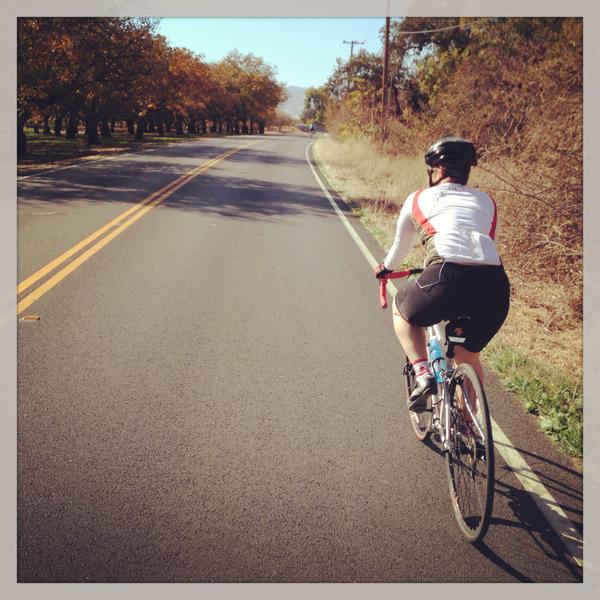
California drivers must stay at least 3 feet away from bicyclists when passing them under a new state law that went into effect Tuesday.
The Three Feet for Safety Act, signed by Gov. Jerry Brown in September 2013 after years of lobbying on the part of cycling activists, requires a 3-foot buffer between cars while passing cyclists.
If roadway conditions or traffic prevent drivers from maintaining the required distance betweens their vehicles and cyclists, motorists may only pass bikes after they’ve slowed to a “speed that is reasonable and prudent” and “when doing so would not endanger the safety of the operator of the bicycle,” according to the law.
The previous law required drivers stay a “safe” but unspecified distance from bicyclists.
Violators will be fined $35 if they drive too close to a bicyclist; a $220 fine will be imposed if a cyclist is injured when a driver is violating the 3-foot buffer.
In announcing the new law Tuesday, public safety agencies advised motorists to slow down near bicyclists, pay attention, check their blind spots and have patience.
The California Highway Patrol’s Southern Division reminded drivers that cyclists have a right to take control over the full lane of traffic if conditions are unsafe for drivers to pass.
“Be aware that when a lane is too narrow for vehicles and bikes to be safely side by side, bicyclist should ride in or near the center of that lane to discourage motorists from unsafe passing,” the division wrote in a news release.
Bicyclists were asked to ride with the flow of traffic, not against it; be visible, and stop at red lights and stop signs.
The law was authored by Assemblyman Steven Bradford, a Democrat from Gardena who describes himself as a lifelong cyclist; the city of Los Angeles was a sponsor.
Brown had vetoed earlier versions of the law in 2011 and 2012.
Nearly 25 states have a similar law, the Los Angeles Times reported.
KTLA’s Melissa Pamer contributed to this article.

View image on Twitter

Tuesday, September 23, 2014

California judge rules against privacy advocate and protects police secrecy

OFF THE WIRE
Man loses bid to access to police license plate records in case with repercussions on surveillance and government databases
Ronald Reagan Freeway  california
 Expanding networks of cameras mounted on stoplights and police cars are collecting license plate scans across the US. Photograph: David McNew/Getty Images
A California judge’s initial ruling against a tech entrepreneur, who seeks access to records kept secret in government databases detailing the comings and goings of millions of cars in the San Diego area, via license plate scans, was the second legal setback within a month for privacy advocates.
The tentative decision issued Thursday upheld the right of authorities to block the public from viewing information collected on their vehicles, by way of vast networks that rely on cameras mounted on stoplights and police cars.
The rapidly expanding systems and their growing databases have been the subject of a larger debate pitting privacy rights against public safety concerns in a new frontier over high-tech surveillance. A Los Angeles judge ruled in August that city police and sheriff’s departments don’t have to disclose records from the 3m plates they scan each week.
Micheal Robertson, best known for creating the music website MP3.com, stepped into the discussion with a personal lawsuit, asking for access to only his information. He will still get to present his case Friday, despite the initial ruling from San Diego Superior Court Judge Katherine Bacal that went against him.
The ACLU of southern California and the Electronic Frontier Foundation had been seeking a week’s worth of data from databases that hold hundreds of millions of scans.
The license plate scanning systems have multiplied across the US over the last decade, funded largely by Homeland Security grants. They’re governed by a patchwork of local laws and regulations that have not yet standardized how they’re used and who has access to the information they collect.
About seven in 10 law enforcement agencies used license plate scanners in 2012 and an overwhelming majority planned to acquire such systems or expand their use, according to a study by the Police Executive Research Forum, a research and policy group.
Privacy advocates say these files need to be open to public scrutiny to prevent government overreach and unconstitutional privacy invasions.
“If I’m not being investigated for a crime, there shouldn’t be a secret police file on me” that details “where I go, where I shop, where I visit”, Robertson said in an interview with the Associated Press prior to the ruling. “That’s crazy, Nazi police-type stuff.”
On the other side are government and law enforcement officials who say they’re not misusing the systems and that tracking and storing the data can help with criminal investigations, either to incriminate or exonerate a suspect.
“At some point, you have to trust and believe that the agencies that you utilize for law enforcement are doing what’s right and what’s best for the community, and they’re not targeting your community,” Los Angeles County sheriff’s Sgt John Gaw said.
In San Diego’s case, records are kept for up to two years, but other agencies keep them five years or more and are limited mainly by server space.
“If that information is deleted or purged too quickly, then we lost that, and we can never go back,” said Lt Karen Stubkjaer of the San Diego Sheriff’s Department.
In Robertson’s case against the San Diego Association of Governments, he was seeking access to a sweeping system that links police, sheriffs and eight other law enforcement agencies. The San Diego sheriff’s department has made 9.8m scans since the system was introduced in 2009, Stubkjaer said.
He said he has no problem with officials using the technology for legitimate purposes like tracking down stolen cars. But he says license plate readers are ripe for abuse, and there’s no reason for long-term storage of data on innocent people.
“I want a strong police force,” he said. “But I also want my personal freedom.”
Neither ruling set legal precedent, but are part of a growing debate.
“License plate readers are part of a larger conversation,” said Chuck Wexler, head of the Police Executive Research Forum. “Technology is changing how the police view crime, and it is raising a number of public policy issues: how long do you hold on to this information? And what part of this information should the public have access to?”

Stats shatter motorcycle myths

OFF THE WIRE
We’ve all seen them: those young men on high-powered, lightweight Japanese motorcycles who weave in and out of traffic lanes and roar away when the light changes like a bat out of hell.

Then there are recent reports from Ontario Provincial Police that say the number of people killed on our highways could hit a seven-year high this year.

Police say this summer has been particularly bad. By mid-August, there had already been 26 fatal bike collisions compared to a total of 29 in 2013.

Last year was the worst year for motorbike deaths in recent memory, according to OPP Sgt. Kerry Schmidt.

But the statistics tell a different tale about just who is most at risk of dying in motorcycle crashes in Ontario.

A new report from Torstar News shows that despite what our biases might tell us, OPP statistics and hospital emergency room data show older men may be most in danger.

Police data released last month showed half of Ontario motorcyclists who died in crashes in the last seven years were between 45 and 64, and that riders under age 25 only made up nine per cent of those deaths.

Schmidt said part of the changing statistics could have something to do with more aging boomers heading out to dealerships to snap up motorcycles, but statistics from Hamilton Health Sciences’ trauma program reinforce the notion that older men are at high risk: men between age 40 and 59 made up 58 per cent of motorcycle crash patients over a year.

Men aged 20 to 39 arrived at the trauma unit less than half as often in the same period.

Dr. Julian Owen, the trauma leader at Hamilton General Hospital’s regional trauma centre, where the most severe cases go, said the older patients are when they get hurt, the more likely they are to die.

Owen said the thrill of the wind in your hair makes motorcycle driving so attractive, but the sight of so much carnage led the doctor to sell his own motorcycle because having his own family made him scared he’d end up a statistic.

The latest statistics should give middle-aged men yearning to recapture their youth pause when it comes to trading in the boring minivan for a honking, rumbling motorcycle.

Read more: http://www.niagarathisweek.com/opinion-story/4822967-stats-shatter-motorcycle-myths/

BABE OF THE DAY