OFF THE WIRE
BY: GINGER THOMPSON
and SCOTT SHANE
nytimes.com
- Cables Portray Expanded Reach of Drug Agency...
Leaked cables reveal the Drug Enforcement Administration’s global reach, noting dealings with Lansana Kouyaté of Guinea, left, Ricardo Martinelli of Panama, center left, and Ernest Bai Koroma of Sierra Leone. Karen Tandy, right, the D.E.A.’s former administrator, discussed Afghan missions in the cables.
WASHINGTON — The Drug Enforcement Administration has been transformed into a global intelligence organization with a reach that extends far beyond narcotics, and an eavesdropping operation so expansive it has to fend off foreign politicians who want to use it against their political enemies, according to secret diplomatic cables.
In far greater detail than previously seen, the cables, from the cache obtained by WikiLeaks and made available to some news organizations, offer glimpses of drug agents balancing diplomacy and law enforcement in places where it can be hard to tell the politicians from the traffickers, and where drug rings are themselves mini-states whose wealth and violence permit them to run roughshod over struggling governments.
Diplomats recorded unforgettable vignettes from the largely unseen war on drugs:
¶In Panama, an urgent BlackBerry message from the president to the American ambassador demanded that the D.E.A. go after his political enemies: “I need help with tapping phones.”
¶In Sierra Leone, a major cocaine-trafficking prosecution was almost upended by the attorney general’s attempt to solicit $2.5 million in bribes.
¶In Guinea, the country’s biggest narcotics kingpin turned out to be the president’s son, and diplomats discovered that before the police destroyed a huge narcotics seizure, the drugs had been replaced by flour.
¶Leaders of Mexico’s beleaguered military issued private pleas for closer collaboration with the drug agency, confessing that they had little faith in their own country’s police forces.
¶Cables from Myanmar, the target of strict United States sanctions, describe the drug agency informants’ reporting both on how the military junta enriches itself with drug money and on the political activities of the junta’s opponents.
Officials of the D.E.A. and the State Department declined to discuss what they said was information that should never have been made public.
Like many of the cables made public in recent weeks, those describing the drug war do not offer large disclosures. Rather, it is the details that add up to a clearer picture of the corrupting influence of big traffickers, the tricky game of figuring out which foreign officials are actually controlled by drug lords, and the story of how an entrepreneurial agency operating in the shadows of the F.B.I. has become something more than a drug agency. The D.E.A. now has 87 offices in 63 countries and close partnerships with governments that keep the Central Intelligence Agency at arm’s length.
Because of the ubiquity of the drug scourge, today’s D.E.A. has access to foreign governments, including those, like Nicaragua’s and Venezuela’s, that have strained diplomatic relations with the United States. Many are eager to take advantage of the agency’s drug detection and wiretapping technologies.
In some countries, the collaboration appears to work well, with the drug agency providing intelligence that has helped bring down traffickers, and even entire cartels. But the victories can come at a high price, according to the cables, which describe scores of D.E.A. informants and a handful of agents who have been killed in Mexico and Afghanistan.
In Venezuela, the local intelligence service turned the tables on the D.E.A., infiltrating its operations, sabotaging equipment and hiring a computer hacker to intercept American Embassy e-mails, the cables report.
And as the drug agency has expanded its eavesdropping operations to keep up with cartels, it has faced repeated pressure to redirect its counternarcotics surveillance to local concerns, provoking tensions with some of Washington’s closest allies.
Sticky Situations
Cables written in February by American diplomats in Paraguay, for example, described the D.E.A.’s pushing back against requests from that country’s government to help spy on an insurgent group, known as the Paraguayan People’s Army, or the EPP, the initials of its name in Spanish. The leftist group, suspected of having ties to the Colombian rebel group FARC, had conducted several high-profile kidnappings and was making a small fortune in ransoms.
When American diplomats refused to give Paraguay access to the drug agency’s wiretapping system, Interior Minister Rafael Filizzola threatened to shut it down, saying: “Counternarcotics are important, but won’t topple our government. The EPP could.”
The D.E.A. faced even more intense pressure last year from Panama, whose right-leaning president, Ricardo Martinelli, demanded that the agency allow him to use its wiretapping program — known as Matador — to spy on leftist political enemies he believed were plotting to kill him.
The United States, according to the cables, worried that Mr. Martinelli, a supermarket magnate, “made no distinction between legitimate security targets and political enemies,” refused, igniting tensions that went on for months.
Mr. Martinelli, who the cables said possessed a “penchant for bullying and blackmail,” retaliated by proposing a law that would have ended the D.E.A.’s work with specially vetted police units. Then he tried to subvert the drug agency’s control over the program by assigning nonvetted officers to the counternarcotics unit.
And when the United States pushed back against those attempts — moving the Matador system into the offices of the politically independent attorney general — Mr. Martinelli threatened to expel the drug agency from the country altogether, saying other countries, like Israel, would be happy to comply with his intelligence requests.
Eventually, according to the cables, American diplomats began wondering about Mr. Martinelli’s motivations. Did he really want the D.E.A. to disrupt plots by his adversaries, or was he trying to keep the agency from learning about corruption among his relatives and friends?
One cable asserted that Mr. Martinelli’s cousin helped smuggle tens of millions of dollars in drug proceeds through Panama’s main airport every month. Another noted, “There is no reason to believe there will be fewer acts of corruption in this government than in any past government.”
As the standoff continued, the cables indicate that the United States proposed suspending the Matador program, rather than submitting to Mr. Martinelli’s demands. (American officials say the program was suspended, but the British took over the wiretapping program and have shared the intelligence with the United States.)
In a statement on Saturday, the government of Panama said that it regretted “the bad interpretation by United States authorities of a request for help made to directly confront crime and drug trafficking.” It said that Panama would continue its efforts to stop organized crime and emphasized that Panama continued to have “excellent relations with the United States.”
Meanwhile in Paraguay, according to the cables, the United States acquiesced, agreeing to allow the authorities there to use D.E.A. wiretaps for antikidnapping investigations, as long as they were approved by Paraguay’s Supreme Court.
“We have carefully navigated this very sensitive and politically sticky situation,” one cable said. “It appears that we have no other viable choice.”
A Larger Mandate
Created in 1973, the D.E.A. has steadily built its international turf, an expansion primarily driven by the multinational nature of the drug trade, but also by forces within the agency seeking a larger mandate. Since the 2001 terrorist attacks, the agency’s leaders have cited what they describe as an expanding nexus between drugs and terrorism in further building its overseas presence.
In Afghanistan, for example, “DEA officials have become convinced that ‘no daylight’ exists between drug traffickers at the highest level and Taliban insurgents,” Karen Tandy, then the agency’s administrator, told European Union officials in a 2007 briefing, according to a cable from Brussels.
Ms. Tandy described an agency informant’s recording of a meeting in Nangarhar Province between 9 Taliban members and 11 drug traffickers to coordinate their financial support for the insurgency, and she said the agency was trying to put a “security belt” around Afghanistan to block the import of chemicals for heroin processing. The agency was embedding its officers in military units around Afghanistan, she said. In 2007 alone, the D.E.A. opened new bureaus in Tajikistan, Kyrgyzstan and Dubai, United Arab Emirates, as well as in three Mexican cities.
Cables describe lengthy negotiations over the extradition to the United States of the two notorious arms dealers wanted by the D.E.A. as it reached beyond pure counternarcotics cases: Monzer al-Kassar, a Syrian arrested in Spain, and Viktor Bout, a Russian arrested in Thailand. Both men were charged with agreeing to illegal arms sales to informants posing as weapons buyers for Colombian rebels. Notably, neither man was charged with violating narcotics laws.
Late last year in a D.E.A. case, three men from Mali accused of plotting to transport tons of cocaine across northwest Africa were charged under a narco-terrorism statute added to the law in 2006, and they were linked to both Al Qaeda and its North African affiliate, called Al Qaeda in the Islamic Maghreb.
The men themselves had claimed the terrorism link, according to the D.E.A., though officials told The New York Times that they had no independent corroboration of the Qaeda connections. Experts on the desert regions of North Africa, long a route for smuggling between Africa and Europe, are divided about whether Al Qaeda operatives play a significant role in the drug trade, and some skeptics note that adding “terrorism” to any case can draw additional investigative resources and impress a jury.
New Routes for Graft
Most times, however, the agency’s expansion seems driven more by external forces than internal ones, with traffickers opening new routes to accommodate new markets. As Mexican cartels take control of drug shipments from South America to the United States, Colombian cartels have begun moving cocaine through West Africa to Europe.
The cables offer a portrait of the staggering effect on Mali, whose deserts have been littered with abandoned airplanes — including at least one Boeing 727 — and Ghana, where traffickers easily smuggle drugs through an airport’s “VVIP (Very Very Important Person) lounge.”
Top-to-bottom corruption in many West African countries made it hard for diplomats to know whom to trust. In one 2008 case in Sierra Leone, President Ernest Bai Koroma moved to prosecute and extradite three South American traffickers seized with about 1,500 pounds of cocaine, while his attorney general was accused of offering to release them for $2.5 million in bribes.
In Nigeria, the D.E.A. reported a couple of years earlier that diplomats at the Liberian Embassy were using official vehicles to transport drugs across the border because they were not getting paid by their war-torn government and “had to fend for themselves.”
A May 2008 cable from Guinea described a kind of heart-to-heart conversation about the drug trade between the American ambassador, Phillip Carter III, and Guinea’s prime minister, Lansana Kouyaté. At one point, the cable said, Mr. Kouyaté “visibly slumped in his chair” and acknowledged that Guinea’s most powerful drug trafficker was Ousmane Conté, the son of Lansana Conté, then the president. (After the death of his father, Mr. Conté went to prison.)
A few days later, diplomats reported evidence that the corruption ran much deeper inside the Guinean government than the president’s son. In a colorfully written cable — with chapters titled “Excuses, Excuses, Excuses” and “Theatrical Production” — diplomats described attending what was billed as a drug bonfire that had been staged by the Guinean government to demonstrate its commitment to combating the drug trade.
Senior Guinean officials, including the country’s drug czar, the chief of police and the justice minister, watched as officers set fire to what the government claimed was about 350 pounds of marijuana and 860 pounds of cocaine, valued at $6.5 million.
In reality, American diplomats wrote, the whole incineration was a sham. Informants had previously told the embassy that Guinean authorities replaced the cocaine with manioc flour, proving, the diplomats wrote, “that narco-corruption has contaminated” the government of Guinea “at the highest levels.”
And it did not take the D.E.A.’s sophisticated intelligence techniques to figure out the truth. The cable reported that even the ambassador’s driver sniffed out a hoax.
“I know the smell of burning marijuana,” the driver said. “And I didn’t smell anything.”
Andrew W. Lehren contributed reporting.
Thursday, December 30, 2010
PROJECT - " NOT GIULTY "
WELCOME
Thank you for visiting the PROJECT: Not Guilty website.
A very wise man once said,
"Invitations to the revolution are not engraved"
Dedication -
The PNG Team proudly dedicates this project to the victims of the Texas criminal justice system unfortunate enough to have been falsely arrested, wrongfully convicted, and/or subsequently denied consideration for a Full Pardon - for innocence.
Victims of the System -
You are hereby encouraged to consider sharing your personal experience(s) regarding a false arrest and/or wrongful conviction with the public at large in our BLOGABOUTIT Forum. It’s completely understandable that the fear of embarrassment, ridicule, and having to explain, and/or defend, prevents the majority from speaking out. Honestly, keeping a false arrest and wrongful conviction to yourself isn’t right or healthy.
Time to Name Names -It's time to name names, so that those guilty of these atrocities have an opportunity to: explain themselves, deny any involvement, and/or apologize to their victims, their own families, and to the public they serve(d). Patterns of Police and Prosecutorial Misconduct can be revealed when the public learns the names of the individuals responsible for false arrests and wrongful convictions.
PNG will publish the certified Case Files, the Police Incident Reports, the Mug Shots, including: the names of all parties, along with any and all correspondence submitted. The PNG Team offers you unlimited space at the PNG Forum to share your story and evidence showing a false arrest, wrongful conviction, and/or subsequent denial of a Full Pardon.
We invite those public servants named in the documents to consider taking time to publicly apologize to their victims that include letters of recommendation for Full Pardons for innocence.
History Repeating Itself or a Vicious Cycle? -
The wronged community has consisted of human beings from every class, race and political afiliation from day one. The historic and catastrophic failure to officially unite as one, simply allows the Bad Cop(s) to get away with falsely arresting at will. It leaves the rogue Assistant District Attorney(s) to continue enjoying a life of Prosecutorial Misconduct supported by immunity loopholes. The citizens of voting age will continue to: receive Jury Duty notices, avoid or accept the duty, miss work, etc... All along with the plan being to dismiss the Jury due to the Prosecution Team and Defense Team plea-bargaining with the innocent at lunch recess.
Incompetent Attorneys/Lawyers/Public Defenders will simply move on to the next case as they attempt to forget about their personal role and involvement in the game. The majority will dump Case Files after only three to five years in an attempt to clear their conscience and distance themselves. All along, none of this could possibly happen without the Judge's cooperation, for it is he/she that allows and/or denies. *Worst of all: the rogue, the bad, and the incompetent, aspire to become judges themselves, therefore, the vicious cycle never ends.
Crime Victims Have Rights Both: Legal & Moral -
We have the right to report it to the authorities in a timely fashion and hopefully ASAP. We also have a moral obligation to be truthful while in the process. (Insert relevant Biblical verse here.) The information provided to the officer becomes part of the Police Incident Report, including description(s) of suspect(s), description(s) of weapons used and lists any items taken.
Picking & Choosing –
If suspect(s) are found in the area fitting the original description(s) they’ll: be arrested, searched and taken to jail. If someone is later found to be in possession of any of the items taken, they and everyone with them will be: arrested, searched, and taken to jail.
The crime victim will be shown a photo array and allowed to pick out the suspect(s). If a suspect(s) is picked/chosen from the photo array, the victim will have another opportunity to pick the suspect(s) out of a live Show-Up. Fillers are used both times and should be comprised of five individuals with similar features such as: *race, *height, *weight, *hair type, color and length. In some cases the suspect(s) are driven to the victim’s location (crime scene) for immediate identification.
No matter which method is utilized there are only three acceptable options for the crime victim to consider:
*Opt. A - No suspect(s) fit description(s).
*Opt. B - Positive Identification one or more.
*Opt. C - Tentative Identification one or more.
When Crime Victims & Cops Conspire to Convict -
Like it or not, every single day someone becomes a victim of a criminal act. Unfortunately, many are easily convinced by the police and the ADA that the real perpurtrator(s) was arrested. Generations of holdouts in the belief that police don't lie or arrest the wrong people (on purpose) are eager to assist them in obtaining a conviction.
In Case after Case, the Team has received Police Incident Reports clearly showing crime victims providing detailed description(s) of suspect(s) moments after the crime occurred. These same victims go on to Positively Identifying suspect(s) from Photo Arrays and live Show-Ups having absolutely nothing in common with the Original Description(s).
As unbelievable and outrageous as this maybe, it's mind-boggling to turn the page and see Detectives confronting the victim(s) about the gross descrepentcies between the Original Suspect(s) Description(s) and the Suspect(s) he/she Positively Identified moments earlier. In particular, Cases out of Harris County, Texas, clearly show Dectectives ignoring the gross descrepentcies and seeking felony charges.
Despite these obvious differences ex: wrong skin color, wrong hair color, type & length, the D. A's. 'Intake' seals the deal over the phone. Something similar to - "Hey Bob, how's the wife? Good, well we gotta Positive Identification on one suspect & a Tentative Identification on one suspect. We need felony charges on both." "Ok, Bye."
WTF? -
When the Detectives bring these gross description descrepentcies to the crime victim’s attention, one would think that it’s obvious that the suspect(s) would ultimately be released. Here in Texas, we have witnessed just the opposite as Detectives are shown in Case after Case literally ignoring the fact that they themselves just confronted a crime victim about gross description descrepentcies. Despite all of this, it is very disturbing to know that the Supervisors happily sign off on the report(s) as Closed/Cleared.
*Even more alarming is when the D. A’s. ‘Intake’ is shown systematically agreeing (usually over the phone) to file felony charges. Five minutes of comparing the information prior to taking charges and/or having a citizen sit in during live Show-Up operations could possibly prevent this type of conspiracy from resulting in a wrongful conviction. Too Easy?
What Do You Get When The District Attorney Encourages His Assistant D. As. to
“Do The Right Thing”?
When two or more individuals are shown to have knowingly & willingly worked in unison to: *file false arrest charges, *disregard gross suspect description discrepancies, *perform improper Photo Array, *perform improper live Show-Up, *present bogus/false evidence to the Grand Jury, fabricate false State’s Exhibits documents, introduce faked evidence into Case Files, *present to the court and display falsified evidence to a jury, intimidate witnesses to not testify, pick a jury only to plea-bargain at lunch recess, etc...?
Give Up?
When Crime Victims
are 100% Wrong About Being 100% Positive?
When the real/actual culprits are blatantly ignored and allowed to continue in their criminal enterprises: the joke is on the Crime Victim(s), their families and the public at large. Thus, leaving the taxpayers to pick up the entire tab. Shame on the crime victim(s) that realizes that the wrong person(s) is in custody but yet conspires with the authorities to obtain a conviction.
I Know Nothing -
When Detectives, Assistant D. As. and Crime Victims are confronted about their actions recorded in Police Incident Reports & Case Files they either: stick to their story, play dumb, or ignore it.
Imagine what it must feel like to be told that the documents clearly show them conspiring to: file false charges, prosecuting the innocent, falsifying evidence, and refusing to acknowledge that they Positively Identified the wrong suspect(s). They all have and will claim ignorance, and/or harassment in hopes that it all goes away.
*If anyone ever comes across information showing any of these three entities:'doing the right thing for the right reasons' via: publically opologizing to the wronged, the citizens and offering to assist the wronged, please forward it to the Team.
Taxpayers Accountability - We all share partial blame for the causes of each and every false arrest and wrongful conviction. Therefore, we end up paying for the side effects experienced by the wronged individuals and the unnecessary burden placed on society as a whole. From day one: salaries are being collected, expenses are being paid, fees are being charged, the employed become unemployed and man hours are lost. Lives are further turned upside down in the form of: divorces, foreclosures, bankruptcies, etc…
As families of the working wronged are forced to turn to assistance from the State, County and Public Utilities the taxpayer is forced to pick up the tab. When and if the falsely arrested and wrongfully convicted collect from a settlement, it is the taxpayer that funds the account. The Tim Cole Act makes those eligible for a financial apology from the State of Texas $80,000. per year of wrongful incarceration plus-plus. The annual cost of housing the rightfully and wrongfully alike is not cheap when factoring in: education, expected and unforeseen medical/dental issues.
Voter Accountability –
Voting Just to be Voting Syndrome -
You can make a difference by simply taking time to teach yourself and others how to stop voting just to be voting. Who knew that it could be that simple?
Research and learn about a candidate’s stance on false arrests, wrongful convictions & plea-bargaining abuse. Inquire if they have any solutions and intentions to implement them once in office. Hold them to their word. Remember, it’s very easy to vote especially when it’s done just to be voting. It's takes courage to confront candidates about what they are going to do about the historically ignored issues. It’s even harder to confront them once in office.
Bless those voters that step up, speak up and take a stand. Bless those that listen, research and implement workable solutions benefiting the public at large. Shame on those that don’t.
The Supreme Court
"Plead ‘em, If You Got ‘em" -
When the Supreme Court gave the green light to Plea-Bargain and let the taxpayers of tomorrow worry about the tab, it essentially gave the policing authorities the thumbs up to arrest at will. The Courts placed the detainees either on Probation or in Jail and/or Prison. This led to a massive prison expansion program and strained the welfare system as rolls grew due to bread winners being locked-up.
Police Reports and Case Files indicate that the permission to - Pled 'em If you got 'em the the Police and Courts recieved from the Supreme Court knowingly included scores of innocents. In Texas this led to the Profiling of those having long hair, facial hair, unemployed and homeless. This resulted in a state-wide masss round up and arrest of those found being in possession of just one joint. Other state's have reported harsh sentences for having seeds or residue in the ashtray. Would you believe that this is going on right now, today? Your tax dollars are still hard at work and you have no one to blame but yourselves.
A Round-Up Campaign lasting for decades resulted in what we see today: prison and jail overcrowding, as the Courts clear their Dockets via: Plea-Bargaining in 95% - 98% of all criminal cases. Knowing this makes that little thing called Voir Dire and sitting on jury only to be dismissed a running joke. Not to mention the lost man-hours, the $6.00 per day - plus parking checks, the 20 to 30 mile one-way trips downtown, etc, puts the joke squarely on the public at large. Mean while, Criminal Defense Lawyers/Attorneys/Public Defenders continue to play plea-bargain games with Assistant D. As.
Leaving us wondering - "If everyone is tapping out 95 - 98 percent of the time, does that mean that cases are being defended only 3 - 5 percent of the time?" If so, "then why not hire a Criminal Negotiator?" Note: (a term coined by the Team and future niche to be carved out) What? What? What?
Why Texas?PROJECT: Not Guilty was launched in Texas in 2009, due to the robust criminal justice system reform movement. The universal disinterest in Closed & Cleared NON-DNA related claims of actual innocence by the multitudes of projects and groups that have come before us, has inspired us to focus primarily on these historically ignored cases. The Team prays that its endeavors combined with those across the state, contribute to greatly reducing the amount of false arrests and hopefully prevents wrongful convictions of tomorro by addressing all claims.
It's very clear that Texas' leaders (Mayors, D.As., Governors, TBPP, etc...) have no intentions to honestly address 'all' past, present & future false arrests and wrongful convictions on it's own. Texans deserve to have an honest, transparent and streamlined Clemency / Pardon application procedure that doesn't discriminate against applicants based on the type of evidence proving innocence. With this in mind, true criminal justice system reforms should encompass from the very moment of arrest all the way through the entire Clemency / Pardon application process.
The Team will also study certain aspects of the Texas Criminal Justice System and its relationship with the Clemency Section of the Texas Board of Pardons and Paroles. We will learn how this department operates in relation to being charged with handling the Regular Full Pardon & Full Pardon - for innocence application packets, analyzing, researching and preparing the files for consideration by the Board.
Currently Full Pardons - for innocence applications are considered only on the unanimous recommendation of the applicant's three trial officials (sentencing or current judge, district attorney, and Sheriff). Thus, ensuring that it is virtually impossible to comply with the requirement due to there being absolutely no incentives for any of the three. Eliminating the requirement of applicants seeking a Full Pardon - for innocence should be considered.
In Phase One of PROJECT: Not Guilty, you are invited to follow the Team as we embark on a mission to implement and complete a very unique project. One that will examine all claims of innocence having absolutely nothing to do with DNA, Death Row and/or those Currently in Custody. The Team will also study the many causes of false arrests and the sustained trauma associated with being wrongfully convicted. We will conclude with a study of the Clemency application process, where the Team will research the human cost associated with State(s) that systematically denies all applicants seeking a Full Pardon based on innocence.
Phase Two will involve targeting and researching specific cases of False Arrest and wrongful convictions for patterns of Police and Prosecutorial Misconduct. Cases/Claims having sufficient evidence proving innocence and subsequently denied consideration for a Full Pardon for or based on innocence will be show-cased.
Team members will publish false arrests and wrongful conviction related case files, police reports & mug shots, including the names of 'all' parties involved. If you are a bad cop, a rogue ADA, or a lazy judge that allows the bad and enables the rouge while enjoying the many levels of immunity loopholes, now's the time to 'do the right thing for the right reasons'.
SUBMIT YOUR STORY
If you and/or a loved one are truly not guilty and/or have been previously denied a pardon based on innocence and believe your claim of actual innocence deserves further recognition, you are encouraged to contact the PNG Team.
PROJECT: Not Guilty is a for profit at this time but will never charge a fee for services rendered. Instead we have chosen to operate by surviving on our own merits, advertising revenue and of course the kindness of others.
CONTRIBUTE TO THE CAUSE / DISCLAIMER
*Please consider a $5.00 & under non-tax deductable donation.
**You may donate your time in lieu of a monetary contribution.
***Please alert the Team if you would prefer to remain an anonymous donor, for we fully intend on letting the world know the names of those brave enough to sponsor the project.
****By submitting a story, you are not obligated to contribute in any way. There are no written or spoken guarantees that the Team will approve your claim/story for future actions including: placing info. on the cases page and/or improve your chances for obtaining any post conviction relief.
FOLLOW / JOIN THE PROJECT
You have the right to remain silent, as long as you know that you have a civic duty and moral obligation not to. While it truly takes a village to raise a child correctly, it'll take a nation to bring about the correct change we can truly believe in. This is a human issue and the remedy awaits for the unification of mankind, for we've remained separate and silent long enough.
*Please feel free to participate in the Discussions and Solutions about the vast topic of {Not Guilty} in the PNG BLOGABOUIT Forum.
**Attention Spammers, feel free to spamaway. All we ask is that you take time to comment on the topics at hand and/or take part in any poll or Q. & A. series.
The PNG forum just might be the only place on the internet where you are welcome. By choosing to leave an un related comment you forfeit any future opportunities to place your spam here at PNG.
***You are also invited to watch the Team's interviews and participate in the Online Petitions. Surveys, Letters of Recommendation & Letters of Disgust Campaigns at the PNG BLOGABOUTIT BlogCast.
***Consider joining our Services Exchange Program and apply your skills, talents and passions to the goal of righting past wrongs. Join the project's panel of ordinary citizens consisting of both active and retired private investigators, lawyers, police, paralegals, judges, parents, educators, researchers, crime victims and victims of the criminal justice system in an effort to prevent the false arrest and subsequent wrongful convictions of tomorrow by addressing the wrongs of the past.
Thank you for visiting the PROJECT: Not Guilty website.
A very wise man once said,
"Invitations to the revolution are not engraved"
Dedication -
The PNG Team proudly dedicates this project to the victims of the Texas criminal justice system unfortunate enough to have been falsely arrested, wrongfully convicted, and/or subsequently denied consideration for a Full Pardon - for innocence.
Victims of the System -
You are hereby encouraged to consider sharing your personal experience(s) regarding a false arrest and/or wrongful conviction with the public at large in our BLOGABOUTIT Forum. It’s completely understandable that the fear of embarrassment, ridicule, and having to explain, and/or defend, prevents the majority from speaking out. Honestly, keeping a false arrest and wrongful conviction to yourself isn’t right or healthy.
Time to Name Names -It's time to name names, so that those guilty of these atrocities have an opportunity to: explain themselves, deny any involvement, and/or apologize to their victims, their own families, and to the public they serve(d). Patterns of Police and Prosecutorial Misconduct can be revealed when the public learns the names of the individuals responsible for false arrests and wrongful convictions.
PNG will publish the certified Case Files, the Police Incident Reports, the Mug Shots, including: the names of all parties, along with any and all correspondence submitted. The PNG Team offers you unlimited space at the PNG Forum to share your story and evidence showing a false arrest, wrongful conviction, and/or subsequent denial of a Full Pardon.
We invite those public servants named in the documents to consider taking time to publicly apologize to their victims that include letters of recommendation for Full Pardons for innocence.
History Repeating Itself or a Vicious Cycle? -
The wronged community has consisted of human beings from every class, race and political afiliation from day one. The historic and catastrophic failure to officially unite as one, simply allows the Bad Cop(s) to get away with falsely arresting at will. It leaves the rogue Assistant District Attorney(s) to continue enjoying a life of Prosecutorial Misconduct supported by immunity loopholes. The citizens of voting age will continue to: receive Jury Duty notices, avoid or accept the duty, miss work, etc... All along with the plan being to dismiss the Jury due to the Prosecution Team and Defense Team plea-bargaining with the innocent at lunch recess.
Incompetent Attorneys/Lawyers/Public Defenders will simply move on to the next case as they attempt to forget about their personal role and involvement in the game. The majority will dump Case Files after only three to five years in an attempt to clear their conscience and distance themselves. All along, none of this could possibly happen without the Judge's cooperation, for it is he/she that allows and/or denies. *Worst of all: the rogue, the bad, and the incompetent, aspire to become judges themselves, therefore, the vicious cycle never ends.
Crime Victims Have Rights Both: Legal & Moral -
We have the right to report it to the authorities in a timely fashion and hopefully ASAP. We also have a moral obligation to be truthful while in the process. (Insert relevant Biblical verse here.) The information provided to the officer becomes part of the Police Incident Report, including description(s) of suspect(s), description(s) of weapons used and lists any items taken.
Picking & Choosing –
If suspect(s) are found in the area fitting the original description(s) they’ll: be arrested, searched and taken to jail. If someone is later found to be in possession of any of the items taken, they and everyone with them will be: arrested, searched, and taken to jail.
The crime victim will be shown a photo array and allowed to pick out the suspect(s). If a suspect(s) is picked/chosen from the photo array, the victim will have another opportunity to pick the suspect(s) out of a live Show-Up. Fillers are used both times and should be comprised of five individuals with similar features such as: *race, *height, *weight, *hair type, color and length. In some cases the suspect(s) are driven to the victim’s location (crime scene) for immediate identification.
No matter which method is utilized there are only three acceptable options for the crime victim to consider:
*Opt. A - No suspect(s) fit description(s).
*Opt. B - Positive Identification one or more.
*Opt. C - Tentative Identification one or more.
When Crime Victims & Cops Conspire to Convict -
Like it or not, every single day someone becomes a victim of a criminal act. Unfortunately, many are easily convinced by the police and the ADA that the real perpurtrator(s) was arrested. Generations of holdouts in the belief that police don't lie or arrest the wrong people (on purpose) are eager to assist them in obtaining a conviction.
In Case after Case, the Team has received Police Incident Reports clearly showing crime victims providing detailed description(s) of suspect(s) moments after the crime occurred. These same victims go on to Positively Identifying suspect(s) from Photo Arrays and live Show-Ups having absolutely nothing in common with the Original Description(s).
As unbelievable and outrageous as this maybe, it's mind-boggling to turn the page and see Detectives confronting the victim(s) about the gross descrepentcies between the Original Suspect(s) Description(s) and the Suspect(s) he/she Positively Identified moments earlier. In particular, Cases out of Harris County, Texas, clearly show Dectectives ignoring the gross descrepentcies and seeking felony charges.
Despite these obvious differences ex: wrong skin color, wrong hair color, type & length, the D. A's. 'Intake' seals the deal over the phone. Something similar to - "Hey Bob, how's the wife? Good, well we gotta Positive Identification on one suspect & a Tentative Identification on one suspect. We need felony charges on both." "Ok, Bye."
WTF? -
When the Detectives bring these gross description descrepentcies to the crime victim’s attention, one would think that it’s obvious that the suspect(s) would ultimately be released. Here in Texas, we have witnessed just the opposite as Detectives are shown in Case after Case literally ignoring the fact that they themselves just confronted a crime victim about gross description descrepentcies. Despite all of this, it is very disturbing to know that the Supervisors happily sign off on the report(s) as Closed/Cleared.
*Even more alarming is when the D. A’s. ‘Intake’ is shown systematically agreeing (usually over the phone) to file felony charges. Five minutes of comparing the information prior to taking charges and/or having a citizen sit in during live Show-Up operations could possibly prevent this type of conspiracy from resulting in a wrongful conviction. Too Easy?
What Do You Get When The District Attorney Encourages His Assistant D. As. to
“Do The Right Thing”?
When two or more individuals are shown to have knowingly & willingly worked in unison to: *file false arrest charges, *disregard gross suspect description discrepancies, *perform improper Photo Array, *perform improper live Show-Up, *present bogus/false evidence to the Grand Jury, fabricate false State’s Exhibits documents, introduce faked evidence into Case Files, *present to the court and display falsified evidence to a jury, intimidate witnesses to not testify, pick a jury only to plea-bargain at lunch recess, etc...?
Give Up?
When Crime Victims
are 100% Wrong About Being 100% Positive?
When the real/actual culprits are blatantly ignored and allowed to continue in their criminal enterprises: the joke is on the Crime Victim(s), their families and the public at large. Thus, leaving the taxpayers to pick up the entire tab. Shame on the crime victim(s) that realizes that the wrong person(s) is in custody but yet conspires with the authorities to obtain a conviction.
I Know Nothing -
When Detectives, Assistant D. As. and Crime Victims are confronted about their actions recorded in Police Incident Reports & Case Files they either: stick to their story, play dumb, or ignore it.
Imagine what it must feel like to be told that the documents clearly show them conspiring to: file false charges, prosecuting the innocent, falsifying evidence, and refusing to acknowledge that they Positively Identified the wrong suspect(s). They all have and will claim ignorance, and/or harassment in hopes that it all goes away.
*If anyone ever comes across information showing any of these three entities:'doing the right thing for the right reasons' via: publically opologizing to the wronged, the citizens and offering to assist the wronged, please forward it to the Team.
Taxpayers Accountability - We all share partial blame for the causes of each and every false arrest and wrongful conviction. Therefore, we end up paying for the side effects experienced by the wronged individuals and the unnecessary burden placed on society as a whole. From day one: salaries are being collected, expenses are being paid, fees are being charged, the employed become unemployed and man hours are lost. Lives are further turned upside down in the form of: divorces, foreclosures, bankruptcies, etc…
As families of the working wronged are forced to turn to assistance from the State, County and Public Utilities the taxpayer is forced to pick up the tab. When and if the falsely arrested and wrongfully convicted collect from a settlement, it is the taxpayer that funds the account. The Tim Cole Act makes those eligible for a financial apology from the State of Texas $80,000. per year of wrongful incarceration plus-plus. The annual cost of housing the rightfully and wrongfully alike is not cheap when factoring in: education, expected and unforeseen medical/dental issues.
Voter Accountability –
Voting Just to be Voting Syndrome -
You can make a difference by simply taking time to teach yourself and others how to stop voting just to be voting. Who knew that it could be that simple?
Research and learn about a candidate’s stance on false arrests, wrongful convictions & plea-bargaining abuse. Inquire if they have any solutions and intentions to implement them once in office. Hold them to their word. Remember, it’s very easy to vote especially when it’s done just to be voting. It's takes courage to confront candidates about what they are going to do about the historically ignored issues. It’s even harder to confront them once in office.
Bless those voters that step up, speak up and take a stand. Bless those that listen, research and implement workable solutions benefiting the public at large. Shame on those that don’t.
The Supreme Court
"Plead ‘em, If You Got ‘em" -
When the Supreme Court gave the green light to Plea-Bargain and let the taxpayers of tomorrow worry about the tab, it essentially gave the policing authorities the thumbs up to arrest at will. The Courts placed the detainees either on Probation or in Jail and/or Prison. This led to a massive prison expansion program and strained the welfare system as rolls grew due to bread winners being locked-up.
Police Reports and Case Files indicate that the permission to - Pled 'em If you got 'em the the Police and Courts recieved from the Supreme Court knowingly included scores of innocents. In Texas this led to the Profiling of those having long hair, facial hair, unemployed and homeless. This resulted in a state-wide masss round up and arrest of those found being in possession of just one joint. Other state's have reported harsh sentences for having seeds or residue in the ashtray. Would you believe that this is going on right now, today? Your tax dollars are still hard at work and you have no one to blame but yourselves.
A Round-Up Campaign lasting for decades resulted in what we see today: prison and jail overcrowding, as the Courts clear their Dockets via: Plea-Bargaining in 95% - 98% of all criminal cases. Knowing this makes that little thing called Voir Dire and sitting on jury only to be dismissed a running joke. Not to mention the lost man-hours, the $6.00 per day - plus parking checks, the 20 to 30 mile one-way trips downtown, etc, puts the joke squarely on the public at large. Mean while, Criminal Defense Lawyers/Attorneys/Public Defenders continue to play plea-bargain games with Assistant D. As.
Leaving us wondering - "If everyone is tapping out 95 - 98 percent of the time, does that mean that cases are being defended only 3 - 5 percent of the time?" If so, "then why not hire a Criminal Negotiator?" Note: (a term coined by the Team and future niche to be carved out) What? What? What?
Why Texas?PROJECT: Not Guilty was launched in Texas in 2009, due to the robust criminal justice system reform movement. The universal disinterest in Closed & Cleared NON-DNA related claims of actual innocence by the multitudes of projects and groups that have come before us, has inspired us to focus primarily on these historically ignored cases. The Team prays that its endeavors combined with those across the state, contribute to greatly reducing the amount of false arrests and hopefully prevents wrongful convictions of tomorro by addressing all claims.
It's very clear that Texas' leaders (Mayors, D.As., Governors, TBPP, etc...) have no intentions to honestly address 'all' past, present & future false arrests and wrongful convictions on it's own. Texans deserve to have an honest, transparent and streamlined Clemency / Pardon application procedure that doesn't discriminate against applicants based on the type of evidence proving innocence. With this in mind, true criminal justice system reforms should encompass from the very moment of arrest all the way through the entire Clemency / Pardon application process.
The Team will also study certain aspects of the Texas Criminal Justice System and its relationship with the Clemency Section of the Texas Board of Pardons and Paroles. We will learn how this department operates in relation to being charged with handling the Regular Full Pardon & Full Pardon - for innocence application packets, analyzing, researching and preparing the files for consideration by the Board.
Currently Full Pardons - for innocence applications are considered only on the unanimous recommendation of the applicant's three trial officials (sentencing or current judge, district attorney, and Sheriff). Thus, ensuring that it is virtually impossible to comply with the requirement due to there being absolutely no incentives for any of the three. Eliminating the requirement of applicants seeking a Full Pardon - for innocence should be considered.
In Phase One of PROJECT: Not Guilty, you are invited to follow the Team as we embark on a mission to implement and complete a very unique project. One that will examine all claims of innocence having absolutely nothing to do with DNA, Death Row and/or those Currently in Custody. The Team will also study the many causes of false arrests and the sustained trauma associated with being wrongfully convicted. We will conclude with a study of the Clemency application process, where the Team will research the human cost associated with State(s) that systematically denies all applicants seeking a Full Pardon based on innocence.
Phase Two will involve targeting and researching specific cases of False Arrest and wrongful convictions for patterns of Police and Prosecutorial Misconduct. Cases/Claims having sufficient evidence proving innocence and subsequently denied consideration for a Full Pardon for or based on innocence will be show-cased.
Team members will publish false arrests and wrongful conviction related case files, police reports & mug shots, including the names of 'all' parties involved. If you are a bad cop, a rogue ADA, or a lazy judge that allows the bad and enables the rouge while enjoying the many levels of immunity loopholes, now's the time to 'do the right thing for the right reasons'.
SUBMIT YOUR STORY
If you and/or a loved one are truly not guilty and/or have been previously denied a pardon based on innocence and believe your claim of actual innocence deserves further recognition, you are encouraged to contact the PNG Team.
PROJECT: Not Guilty is a for profit at this time but will never charge a fee for services rendered. Instead we have chosen to operate by surviving on our own merits, advertising revenue and of course the kindness of others.
CONTRIBUTE TO THE CAUSE / DISCLAIMER
*Please consider a $5.00 & under non-tax deductable donation.
**You may donate your time in lieu of a monetary contribution.
***Please alert the Team if you would prefer to remain an anonymous donor, for we fully intend on letting the world know the names of those brave enough to sponsor the project.
****By submitting a story, you are not obligated to contribute in any way. There are no written or spoken guarantees that the Team will approve your claim/story for future actions including: placing info. on the cases page and/or improve your chances for obtaining any post conviction relief.
FOLLOW / JOIN THE PROJECT
You have the right to remain silent, as long as you know that you have a civic duty and moral obligation not to. While it truly takes a village to raise a child correctly, it'll take a nation to bring about the correct change we can truly believe in. This is a human issue and the remedy awaits for the unification of mankind, for we've remained separate and silent long enough.
*Please feel free to participate in the Discussions and Solutions about the vast topic of {Not Guilty} in the PNG BLOGABOUIT Forum.
**Attention Spammers, feel free to spamaway. All we ask is that you take time to comment on the topics at hand and/or take part in any poll or Q. & A. series.
The PNG forum just might be the only place on the internet where you are welcome. By choosing to leave an un related comment you forfeit any future opportunities to place your spam here at PNG.
***You are also invited to watch the Team's interviews and participate in the Online Petitions. Surveys, Letters of Recommendation & Letters of Disgust Campaigns at the PNG BLOGABOUTIT BlogCast.
***Consider joining our Services Exchange Program and apply your skills, talents and passions to the goal of righting past wrongs. Join the project's panel of ordinary citizens consisting of both active and retired private investigators, lawyers, police, paralegals, judges, parents, educators, researchers, crime victims and victims of the criminal justice system in an effort to prevent the false arrest and subsequent wrongful convictions of tomorrow by addressing the wrongs of the past.

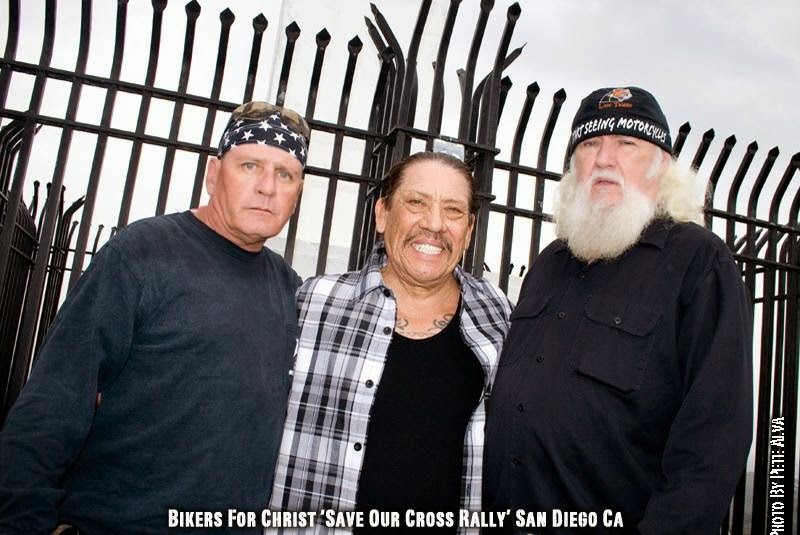
Happy New Year and Mark Your Calendars for the 2011 Easyriders Bike Show! Jan 08 2011
Happy New Year and Mark Your Calendars for the 2011 Easyriders Bike Show! Jan 08 2011
From Pete Alva
Please pass this on to everyone.
I want to wish everyone a very prosperous New Year in 2011.
Again..let's say prayers for those who perished in the San Diego
Saddletramps Motorcycle tragedy, and others who suffered the same fate
throughout the year. As some of you may know, I am producing a film
about bikers and transitioning from photographer to film maker, and
rider safety and awareness is first on my mind when this film hits the
theaters.
Please ride safe and if you do not ride then drive safe and watch out
for bikers on the road. I noticed that the rain damaged some freeway
lanes very extensively so please be aware of this and I will post
photos of the damage on my new website very soon:
http://www.ridesafernow.com/
The Easyriders Bike Show is now located at the L.A. Convention Center!
Most people out there are unaware of this so please take note and also
notice that is a one day only show, but a most exciting show it will
be..with Charlie Hunnam of Sons Of Anarchy doing an autograph signing,
and possible other cast members showing up too! Also a record 55
category trophy presentations for the best of the best choppers and
bikes of the greatest bike show tour ever!
Bring the kids! Now there is a 5000 square foot kid friendly area for
the young ones...so fire those nannys!
For the first time ever The Pete Alva Photography booth will be on
display at The Easyriders Bike Show, with some
new features such as live model photo shoots with professional studio
lighting, and some new photos and posters that have custom frames and
matting, and a couple of surprise model signings, PLUS I will be
selling my 8x10 Sons Of Anarchy photos at my booth that can be signed
by Charlie Hunnam and the cast(These are limited so reserve yours
now!). I will be next to Biker Information Guide and Al Martinez Paint.
Biker Information Guides new January Issue will be handed out at all
our booths. We will be located near the autograph signing area located
near the Easyriders trucks. Come visit my booth and hang out as long as
you want!
Saturday-January 8th 10am to 8pm at The Los Angeles Convention Center!
go to http://www.easyridersevents.com/
$18.00 Adult Admission
4-13yrs- $10.00
Children 3yrs and younger free
Pete Alva
Director-Forworld Pictures
ForWorldPictures.com


From Pete Alva
Please pass this on to everyone.
I want to wish everyone a very prosperous New Year in 2011.
Again..let's say prayers for those who perished in the San Diego
Saddletramps Motorcycle tragedy, and others who suffered the same fate
throughout the year. As some of you may know, I am producing a film
about bikers and transitioning from photographer to film maker, and
rider safety and awareness is first on my mind when this film hits the
theaters.
Please ride safe and if you do not ride then drive safe and watch out
for bikers on the road. I noticed that the rain damaged some freeway
lanes very extensively so please be aware of this and I will post
photos of the damage on my new website very soon:
http://www.ridesafernow.com/
The Easyriders Bike Show is now located at the L.A. Convention Center!
Most people out there are unaware of this so please take note and also
notice that is a one day only show, but a most exciting show it will
be..with Charlie Hunnam of Sons Of Anarchy doing an autograph signing,
and possible other cast members showing up too! Also a record 55
category trophy presentations for the best of the best choppers and
bikes of the greatest bike show tour ever!
Bring the kids! Now there is a 5000 square foot kid friendly area for
the young ones...so fire those nannys!
For the first time ever The Pete Alva Photography booth will be on
display at The Easyriders Bike Show, with some
new features such as live model photo shoots with professional studio
lighting, and some new photos and posters that have custom frames and
matting, and a couple of surprise model signings, PLUS I will be
selling my 8x10 Sons Of Anarchy photos at my booth that can be signed
by Charlie Hunnam and the cast(These are limited so reserve yours
now!). I will be next to Biker Information Guide and Al Martinez Paint.
Biker Information Guides new January Issue will be handed out at all
our booths. We will be located near the autograph signing area located
near the Easyriders trucks. Come visit my booth and hang out as long as
you want!
Saturday-January 8th 10am to 8pm at The Los Angeles Convention Center!
go to http://www.easyridersevents.com/
$18.00 Adult Admission
4-13yrs- $10.00
Children 3yrs and younger free
Pete Alva
Director-Forworld Pictures
ForWorldPictures.com


A Premature Alarm Regarding Police Fatality Rates
OFF THE WIRE
http://www.injusticeeverywhere.com/
A Premature Alarm Regarding Police Fatality Rates
December 29th, 2010
The big law enforcement related news piece dominating the media today comes courtesy of a press release from the Law Enforcement Officers Memorial Fund (LEOMF) insisting that an apparent increase in law enforcement officer deaths in 2010 in comparison to 2009′s record low number of officer deaths should be alarming and attributes the rise to a number of factors including reduced funding for law enforcement officers and increasingly violent criminals.
While we definitely do find it alarming when any law enforcement officer loses his or her life in an act of violence, we do feel it necessary to examine these numbers in order to put them into perspective, especially since the LEOMF and a professor from the John Jay College of Criminal Justice cited police accountability projects such as ours here at the NPMSRP as the reason for the rise in police officer deaths they claim they were seeing around mid-year.
Interestingly, in response to those wild allegations, we examined the alarming trend cited by the LEOMF in July and did some statistical analysis to determine what the actual homicide rate was for law enforcement officers and, surprisingly, our projected rate of officers who died in acts of homicidal violence ended up being pretty accurate.
Back then we determined that:
…in 2009 there were 127 line of duty deaths, of which, 57 of those fatalities could be attributed to an act of violence that specifically targeted a police officer whether by firearms, intentional vehicular assault, or assault.
So far in 2010, there have been 98 line of duty deaths, of which, 28 are attributed to an intentional act of violence against a police officer.
So, in 2009 the homicidal fatality rate for law enforcement officers was an estimated 8.14 deaths per 100,000 law enforcement officers. Currently the homicidal fatality rate is at 4.16 per 100,000 and, if projected to the end of year at the current rate, that homicidal fatality rate for 2010 would potentially be 8.31 per 100,000 law enforcement officers… a 0.17 per 100,000 increase or, roughly, a 2.1% increase.
The actual numbers cited by the LEOMF for 2010 are that 160 officers died in 2010 and that 59 of those law enforcement officers died in apparent homicidal causes for 2010. This would translate to a homicide rate of 8.35 officers per 100,000 based on an estimated employment rate of 706,886 sworn law enforcement officers in the US per the latest FBI-DOJ UCR numbers released earlier this year.
So, the 2010 homicidal death rate for law enforcement officers in 2009 was 8.14 per 100,000 and the 2010 homicidal fatality rate was 8.35 per 100,000 which translates to a 2.5% increase in the homicide rate for police officers. If we use the numbers according to LEOMF sources in that there are 800,000 active sworn officers in the US, then the homicide rate drops to 7.38 per 100,000 but that 800,000 number cited does not seem to reflect a general decline in law enforcement employment rates that we’ve seen lately due to the declining economy.
So, in conclusion, yes, there has been an increase in deaths by homicidal violence for police officers in 2010 and any increase should be examined rationally to determine if there are prudent ways to address preventable deaths. But the increase seen for 2010 is not as alarming as we are told it should be and definitely not extensive enough from which one could derive any conclusive causative effect, such as blaming it on efforts to increase accountability and transparency within law enforcement agencies in the US as was done earlier this year.
http://www.injusticeeverywhere.com/
A Premature Alarm Regarding Police Fatality Rates
December 29th, 2010
The big law enforcement related news piece dominating the media today comes courtesy of a press release from the Law Enforcement Officers Memorial Fund (LEOMF) insisting that an apparent increase in law enforcement officer deaths in 2010 in comparison to 2009′s record low number of officer deaths should be alarming and attributes the rise to a number of factors including reduced funding for law enforcement officers and increasingly violent criminals.
While we definitely do find it alarming when any law enforcement officer loses his or her life in an act of violence, we do feel it necessary to examine these numbers in order to put them into perspective, especially since the LEOMF and a professor from the John Jay College of Criminal Justice cited police accountability projects such as ours here at the NPMSRP as the reason for the rise in police officer deaths they claim they were seeing around mid-year.
Interestingly, in response to those wild allegations, we examined the alarming trend cited by the LEOMF in July and did some statistical analysis to determine what the actual homicide rate was for law enforcement officers and, surprisingly, our projected rate of officers who died in acts of homicidal violence ended up being pretty accurate.
Back then we determined that:
…in 2009 there were 127 line of duty deaths, of which, 57 of those fatalities could be attributed to an act of violence that specifically targeted a police officer whether by firearms, intentional vehicular assault, or assault.
So far in 2010, there have been 98 line of duty deaths, of which, 28 are attributed to an intentional act of violence against a police officer.
So, in 2009 the homicidal fatality rate for law enforcement officers was an estimated 8.14 deaths per 100,000 law enforcement officers. Currently the homicidal fatality rate is at 4.16 per 100,000 and, if projected to the end of year at the current rate, that homicidal fatality rate for 2010 would potentially be 8.31 per 100,000 law enforcement officers… a 0.17 per 100,000 increase or, roughly, a 2.1% increase.
The actual numbers cited by the LEOMF for 2010 are that 160 officers died in 2010 and that 59 of those law enforcement officers died in apparent homicidal causes for 2010. This would translate to a homicide rate of 8.35 officers per 100,000 based on an estimated employment rate of 706,886 sworn law enforcement officers in the US per the latest FBI-DOJ UCR numbers released earlier this year.
So, the 2010 homicidal death rate for law enforcement officers in 2009 was 8.14 per 100,000 and the 2010 homicidal fatality rate was 8.35 per 100,000 which translates to a 2.5% increase in the homicide rate for police officers. If we use the numbers according to LEOMF sources in that there are 800,000 active sworn officers in the US, then the homicide rate drops to 7.38 per 100,000 but that 800,000 number cited does not seem to reflect a general decline in law enforcement employment rates that we’ve seen lately due to the declining economy.
So, in conclusion, yes, there has been an increase in deaths by homicidal violence for police officers in 2010 and any increase should be examined rationally to determine if there are prudent ways to address preventable deaths. But the increase seen for 2010 is not as alarming as we are told it should be and definitely not extensive enough from which one could derive any conclusive causative effect, such as blaming it on efforts to increase accountability and transparency within law enforcement agencies in the US as was done earlier this year.
FABIAN v. FULMER HELMETS, INC.
GOOD READING!!!!!
It's about time helmet manufacturers were held accountable! The gov't wants to mandate we wear these unproven pieces of safety equipment, right? So, if somebody dies as a result of wearing one, and it's failed DOT testing... why shouldn't the manufacturer be held accountable?
There's at least one federal case law citation we can get from this:
"The label represents to the public that the manufacturer has satisfied Standard 218's testing requirements." Fabian v. Fulmer Helmets, Inc, United States Court of Appeals, Sixth Circuit, December 23, 2010
It could be used in arguments that the DOT symbol is intended as an advisory to consumers. For law enforcement within a state to use the DOT symbol in enforcement of laws against vehicle operators and/or passengers is perverting the intent of the labeling portion of the standard by applying it to imply a necessity after point of sale, when really it is like the federal law which made it unlawful to remove the mattress tag unless done by consumers after point of sale.
Does anyone else see anything they can get from this? I suspect with all the text about preemption there might be a few more useful citations if we look close enough.
jan
FABIAN v. FULMER HELMETS, INC.
ROBERT FABIAN, PLAINTIFF-APPELLANT,v.FULMER HELMETS, INC., DEFENDANT-APPELLEE.
No. 10-5009.
United States Court of Appeals, Sixth Circuit.
Argued: October 19, 2010.
Decided and Filed: December 23, 2010.
ARGUED: Michael J. Wall, BRANSTETTER, STRANCH & JENNINGS, PLLC, Nashville, Tennessee, for Appellant.
Oscar C. Carr, III, GLANKLER BROWN, PLLC, Memphis, Tennessee, for Appellee.
ON BRIEF: James G. Stranch, III, J. Gerard Stranch, IV, Steven J. Simerlein, BRANSTETTER, STRANCH & JENNINGS, PLLC, Nashville, Tennessee, for Appellant.
Oscar C. Carr, III, GLANKLER BROWN, PLLC, Memphis, Tennessee, for Appellee.
Before: MOORE, SUTTON and FRIEDMAN,* Circuit Judges.
--------------------------------------------------------------------------------
Pursuant to Sixth Circuit Rule 206
OPINION
SUTTON, Circuit Judge.
Robert Fabian, a representative of a yet-to-be-certified class, seeks recovery from a helmet manufacturer for misrepresenting the safety of its helmets. The district court granted the defendant's motion to dismiss the suit, holding that Fabian's complaint fails to state a cognizable claim. Because Fabian's factual allegations, when construed in his favor, state a plausible claim for relief, we reverse.
I.
Tucked within the Department of Transportation is the National Highway Traffic Safety Administration (NHTSA), which regulates the performance of motorcycle helmets (among other vehicle products) under the National Traffic and Motor Vehicle Safety Act of 1966. 49 U.S.C. § 30101 et seq. In accordance with the Safety Act, NHTSA promulgated Standard No. 218, which spells out the testing procedures that helmets sold in the United States must satisfy. 49 C.F.R. § 571.218. One of these procedures is an "impact attenuation test," which involves the dropping of a helmet from a minimum height of six feet onto an anvil to measure the effect of the impact on the helmet. Id. at S7.1. Another test applies force to a helmet's chin strap to determine whether the helmet will remain in place during a crash. See id. at S7.3.
Standard 218 relies on self-certification, which means that companies test and certify their own helmets rather than having NHTSA do it for them. When helmets pass the test, the companies place a "DOT" label on them. 49 C.F.R. § 571.218 at S5.6.1(e). NHTSA enforces these requirements by randomly purchasing helmets, employing independent companies to run compliance tests on them and publishing the results.
Headquartered in Memphis, Tennessee, Fulmer Helmets designs, manufactures and distributes the AF-50 Trooper motorcycle helmet. The AF-50 helmet comes in at least two sizes: small and large.
In 2000, NHTSA selected the large AF-50 helmet for testing. The helmet passed each component of the test. In 2002, NHTSA selected the small AF-50 for testing and it failed two components of the test. It failed the impact attenuation test (because the helmet's absorption of impact, measured in time, exceeded the regulatory requirement of 2.0 milliseconds by 0.2 milliseconds), and it failed the labeling requirement (because the "DOT" symbol appeared an eighth of an inch too high from the bottom of the helmet). Fulmer Helmets did not issue a recall, take any action to inform purchasers or retailers that it had failed the test, or fix or remove the DOT symbol.
On July 22, 2004, Fabian bought two large Fulmer AF-50 helmets. In 2007, Fabian sold one of the helmets to a friend, who later died of severe brain trauma in a motorcycle crash while wearing the helmet.
In April 2009, Fabian filed a complaint against Fulmer Helmets in Tennessee state court, which was later removed to federal court on diversity grounds. The federal complaint alleged (1) fraudulent misrepresentation, (2) negligent misrepresentation, (3) breach of the implied warranty of merchantability and (4) unjust enrichment. Fabian claimed he had "relied on Fulmer's material misrepresentations that such helmets were `DOT approved,'" causing him to purchase an "unsafe," "inferior-quality" helmet that created a "heightened risk of serious physical injury or death." R.5 ¶¶ 3, 4, 23. Fabian sought class certification for all persons who had purchased the AF-50 since the failed 2002 test, while excluding "anyone seeking to recover for physical injuries suffered due to the failure of the subject helmets." R.5 ¶ 24. Fabian asked for damages in the form of a refund and disgorgement of profits.
Fulmer Helmets filed a Rule 12(b)(6) motion to dismiss the case for these reasons, among others: (1) Fabian failed to state a claim as a matter of law; (2) the Safety Act preempted the lawsuit; and (3) Tennessee's statute of limitations barred the claims.
The district court granted Fulmer Helmets' motion to dismiss. It held that Fabian failed to state a claim because Fabian had purchased two large helmets, and only small helmets failed the 2002 test. The court reasoned that Fabian had not purchased "helmets similar in all respects to the helmets which allegedly failed the August 2002 testing forming the basis for [Fabian's] claims." R.24 at 27. At the same time, however, the court rejected one of Fulmer Helmets' alternative arguments, holding that the Safety Act did not expressly or impliedly preempt Fabian's claims. It reasoned that the Act's savings clause carves state common law claims from the preemptive scope of the statute and that the state law claims would not "present an obstacle to the federal objective of `self-certification.'" Id. at 24. Lastly, the court held that Tennessee's statute of limitations barred Fabian's claims for breach of implied warranties.
Fabian appeals the failure-to-state-a-claim ruling but not the breach-of-implied-warranties ruling. Fulmer Helmets challenges the preemption ruling.
II.
To survive a motion to dismiss, Fabian must plead "enough factual matter" that, when taken as true, "state[s] a claim to relief that is plausible on its face." Bell Atl. Corp. v. Twombly, 550 U.S. 544, 556, 570 (2007). Plausibility requires showing more than the "sheer possibility" of relief but less than a "probab[le]" entitlement to relief. Ashcroft v. Iqbal, ___ U.S. ___, 129 S.Ct. 1937, 1949 (2009).
In granting the motion to dismiss, the district court used the following chain of reasoning: (1) NHTSA performed a safety test on a large AF-50 helmet in 2000, and the helmet passed all components of the test; (2) NHTSA performed a safety test on a small AF-50 helmet in 2002, and the helmet failed at least one component of the test; and (3) because Fabian premises his claim on the purchase of large AF-50 helmets, his claim is implausible on its face given that Fulmer Helmets passed a 2000 NHTSA test on a large AF-50 helmet.
The problem with this chain of reasoning is that it turns on potential inferences, not necessary ones. There are at least two legitimate ways to think about the significance of the NHTSA tests, and they point in opposite directions when it comes to the merits of this lawsuit. One is that the difference between the 2000 and 2002 test results turns on differences between the performance of the small and large AF-50 helmets. If so, that would support the district court's ruling that the disparity between the size of the helmet bought and the size of the helmet tested is fatal to Fabian's claims. The other reasonable inference, however, is that helmets of the same model, even if differently sized, perform the same. Two differently sized helmets, for example, may be no more distinct as a matter of performance than two differently sized pairs of shoes or two differently sized pairs of pants. If so, the failed 2002 test potentially exposed a defect in all AF-50 helmets, no matter their size.
In the absence of further development of the facts, we have no basis for crediting one set of reasonable inferences over the other. Because either assessment is plausible, the Rules of Civil Procedure entitle Fabian to pursue his claim (at least with respect to this theory) to the next stage—to summary judgment or, if appropriate, a trial after the parties have engaged in any relevant discovery to support one or the other interpretation. So long as we can "draw the reasonable inference that the defendant is liable for the misconduct alleged," Iqbal, 129 S. Ct. at 1949, a plaintiff's claims must survive a motion to dismiss. That inference is reasonable here because "common sense," id. at 1950, tells us that a mass-manufactured consumer product, whether it is shoes, pants or helmets, may utilize the same design (and carry the same flaw) regardless of its size.
Fulmer Helmets stresses that Fabian's large helmet has "passed all tests" and that the 2002 test is irrelevant. Fulmer Helmets Br. 16. But that does not necessarily end the inquiry. The company may have changed its design or manufacturing process for all AF-50s between 2000 and 2002, giving rise to a defect in all of its helmets and negating the relevance of the successful 2000 test result. Or the same test conducted on two randomly selected helmets (otherwise exactly the same) might yield different outcomes due to nothing more than natural statistical variances. The successful 2000 test thus may reflect an aberration unrelated to helmet size, while the failed 2002 test may point to a real flaw in all AF-50s. Because Fabian has "nudged his claims . . . across the line from conceivable to plausible," Iqbal, 129 S. Ct. at 1950-51, he deserves a shot at additional factual development, which is what discovery is designed to give him.
III.
Fulmer Helmets seeks to affirm the judgment on alternative grounds, namely that the Safety Act preempts Fabian's lawsuit. We disagree.
Although Fulmer Helmets' position is not a picture of clarity, the company seems to raise the following multi-step argument. Step one: the Safety Act contains several enforcement mechanisms, including recalls initiated by NHTSA or actions initiated by the Attorney General to enjoin violations of the Safety Act and to collect civil penalties for violations of the Act. Step two: the Safety Act contains no private enforcement provision. Step three: Fabian cannot do indirectly what he cannot do directly by couching his private efforts to enforce the provisions of the Safety Act as state law misrepresentation claims and the like. Step four: Fabian's claims therefore must be dismissed either because they are unauthorized by the Act or are preempted by it.
We can make short work of one aspect of this argument. That the Safety Act does not expressly create a private enforcement action does not by itself defeat Fabian's claims. He has filed each claim under Tennessee law, which authorizes private enforcement actions for fraudulent and negligent misrepresentation. Fabian has no need for, and thus need not invoke, a private right of action under the Safety Act.
The other aspect of Fulmer Helmets' argument—its preemption claim—deserves a longer response. The Safety Act contains a preemption provision, 49 U.S.C. § 30103(b)(1) ("When a [federal standard] is in effect . . . a State may prescribe or continue in effect a standard . . . only if the standard is identical to the [federal] standard."), and a savings clause, id. § 30103(e) ("Compliance with a [federal standard] does not exempt a person from liability at common law."). The savings clause "excludes common-law tort actions" from the express preemption clause, allowing "state tort law to operate—for example, where federal law creates only a . . . minimum safety standard." Geier v. Am. Honda Motor Co., 529 U.S. 861, 868 (2000). At the same time, however, the savings clause does not "foreclose or limit the operation of" implied conflict preemption principles, id. at 869, namely the possibility that a state common law action nonetheless would be preempted because it conflicts with, or "stand[s] as an obstacle" to, id. at 886, the Safety Act or Standard 218.
All of this means two things: (1) the savings clause spares Fabian's misrepresentation claims from express preemption; and (2) to the extent preemption exists, it is because these state law actions "stand as an obstacle" to Standard 218. We see no such obstacle, however.
In passing the Safety Act, Congress sought to "reduce traffic accidents and deaths and injuries resulting from traffic accidents" by authorizing the Secretary of Transportation to "prescribe motor vehicle safety standards." 49 U.S.C. §§ 30101, 30111. The Act defines a "safety standard" as a "minimum standard for . . . motor vehicle equipment performance." Id. § 30102. In 1972, NHTSA decided to address the "dramatic increase in both motorcycle registrations and motorcyclist fatalities" in the previous five years and its finding that "two-thirds to three-fourths of motorcycle fatalities result from head injuries." 37 Fed. Reg. 10,079, 10,079 (May 19, 1972). At the time, helmet companies relied on industry-established quality standards, but the agency found that "some helmets, contrary to their own certification labels, do not meet the requirements of industry specifications, or otherwise exhibit unacceptable characteristics." Id.
NHTSA, as a result, promulgated Standard 218 with the hope of "reduc[ing] deaths and injuries to motorcyclists and other motor vehicle users resulting from head impacts" by establishing "minimum performance requirements for helmets." 38 Fed. Reg. 22,390, 22,391 (Aug. 20, 1973). Manufacturers must label their helmets with a "DOT" sticker, which "constitut[es] the manufacturer's certification that the helmet conforms to the applicable Federal motor vehicle safety standards." 49 C.F.R. § 571.218 at S5.6.1(e). The label represents to the public that the manufacturer has satisfied Standard 218's testing requirements. NHTSA enforces this self-certification regime through "testing, inspection, investigation, or research," 49 U.S.C. § 30118, and has the authority to demand that the manufacturer remedy any defect, such as by issuing a recall, see id. §§ 30118(b)(2)(B), 30120.
The upshot is that Standard 218 creates minimum performance standards that helmet manufacturers must meet in order to place "DOT" labels on their helmets, all subject to NHTSA oversight. Fabian's claims do not conflict with this regulatory regime. The premise of Fabian's common law claims is not the creation of a new standard, whether one below, at or above Standard 218. It is that Fulmer misrepresented its helmets as "DOT approved" through its marketing materials, website and catalogues, as well as by the placement of the "DOT" symbol on the helmets, even after knowing that it failed the 2002 safety test. Liability, if it exists at all, would turn on what Fulmer Helmets said about its products, not on whether its products meet a standard that conflicts with Standard 218.
These claims thus do not "actually conflict" with the requirements of, or the purposes of, the Safety Act or Standard 218. Geier, 529 U.S. at 869. They do not change Standard 218's technical requirements. They do not disturb Standard 218's labeling requirements. And they do not add a new requirement that interferes with what Standard 218 already requires. All that the claims do is potentially impose liability based on representations about whether the Department of Transportation has approved the helmets, even after a failed government-sponsored test. Cf. Cipollone v. Liggett Grp., Inc., 505 U.S. 504, 528-29 (1992) (plurality) (holding that a fraudulent misrepresentation claim was not expressly preempted by the Federal Cigarette Labeling and Advertising Act because it turned on a "general obligation"—the "duty not to deceive"—and because "State-law prohibitions on false statements of material fact do not create diverse, nonuniform, and confusing standards"); see also Altria Grp., Inc. v. Good, 555 U.S. 70, 129 S.Ct. 538, 545-49 (2008).
This approach is consistent with Geier. There, the Supreme Court held that Federal Motor Vehicle Safety Standard 208, which gave car manufacturers a "range of choices" in installing passive restraint systems, impliedly preempted a tort suit that created a duty for defendant-manufacturers to install air-bags (as opposed to other restraint systems). 529 U.S. at 874-75. The Court was concerned that such a duty "presented an obstacle to the variety and mix of devices that the federal regulation sought." Id. at 881. It thus reasoned that Standard 208 contemplated a policy objective that "safety would best be promoted if manufacturers installed alternative protection systems in their fleets rather than one particular system in every car," id., and an air-bag requirement conflicted with this objective. No analogous purpose exists with respect to Standard 218, which seeks only to establish "minimum performance requirements for helmets." 38 Fed. Reg. at 22,391.
IV.
For these reasons, we reverse and remand the case to the district court to consider Fulmer's other defenses in the first instance.
It's about time helmet manufacturers were held accountable! The gov't wants to mandate we wear these unproven pieces of safety equipment, right? So, if somebody dies as a result of wearing one, and it's failed DOT testing... why shouldn't the manufacturer be held accountable?
There's at least one federal case law citation we can get from this:
"The label represents to the public that the manufacturer has satisfied Standard 218's testing requirements." Fabian v. Fulmer Helmets, Inc, United States Court of Appeals, Sixth Circuit, December 23, 2010
It could be used in arguments that the DOT symbol is intended as an advisory to consumers. For law enforcement within a state to use the DOT symbol in enforcement of laws against vehicle operators and/or passengers is perverting the intent of the labeling portion of the standard by applying it to imply a necessity after point of sale, when really it is like the federal law which made it unlawful to remove the mattress tag unless done by consumers after point of sale.
Does anyone else see anything they can get from this? I suspect with all the text about preemption there might be a few more useful citations if we look close enough.
jan
FABIAN v. FULMER HELMETS, INC.
ROBERT FABIAN, PLAINTIFF-APPELLANT,v.FULMER HELMETS, INC., DEFENDANT-APPELLEE.
No. 10-5009.
United States Court of Appeals, Sixth Circuit.
Argued: October 19, 2010.
Decided and Filed: December 23, 2010.
ARGUED: Michael J. Wall, BRANSTETTER, STRANCH & JENNINGS, PLLC, Nashville, Tennessee, for Appellant.
Oscar C. Carr, III, GLANKLER BROWN, PLLC, Memphis, Tennessee, for Appellee.
ON BRIEF: James G. Stranch, III, J. Gerard Stranch, IV, Steven J. Simerlein, BRANSTETTER, STRANCH & JENNINGS, PLLC, Nashville, Tennessee, for Appellant.
Oscar C. Carr, III, GLANKLER BROWN, PLLC, Memphis, Tennessee, for Appellee.
Before: MOORE, SUTTON and FRIEDMAN,* Circuit Judges.
--------------------------------------------------------------------------------
Pursuant to Sixth Circuit Rule 206
OPINION
SUTTON, Circuit Judge.
Robert Fabian, a representative of a yet-to-be-certified class, seeks recovery from a helmet manufacturer for misrepresenting the safety of its helmets. The district court granted the defendant's motion to dismiss the suit, holding that Fabian's complaint fails to state a cognizable claim. Because Fabian's factual allegations, when construed in his favor, state a plausible claim for relief, we reverse.
I.
Tucked within the Department of Transportation is the National Highway Traffic Safety Administration (NHTSA), which regulates the performance of motorcycle helmets (among other vehicle products) under the National Traffic and Motor Vehicle Safety Act of 1966. 49 U.S.C. § 30101 et seq. In accordance with the Safety Act, NHTSA promulgated Standard No. 218, which spells out the testing procedures that helmets sold in the United States must satisfy. 49 C.F.R. § 571.218. One of these procedures is an "impact attenuation test," which involves the dropping of a helmet from a minimum height of six feet onto an anvil to measure the effect of the impact on the helmet. Id. at S7.1. Another test applies force to a helmet's chin strap to determine whether the helmet will remain in place during a crash. See id. at S7.3.
Standard 218 relies on self-certification, which means that companies test and certify their own helmets rather than having NHTSA do it for them. When helmets pass the test, the companies place a "DOT" label on them. 49 C.F.R. § 571.218 at S5.6.1(e). NHTSA enforces these requirements by randomly purchasing helmets, employing independent companies to run compliance tests on them and publishing the results.
Headquartered in Memphis, Tennessee, Fulmer Helmets designs, manufactures and distributes the AF-50 Trooper motorcycle helmet. The AF-50 helmet comes in at least two sizes: small and large.
In 2000, NHTSA selected the large AF-50 helmet for testing. The helmet passed each component of the test. In 2002, NHTSA selected the small AF-50 for testing and it failed two components of the test. It failed the impact attenuation test (because the helmet's absorption of impact, measured in time, exceeded the regulatory requirement of 2.0 milliseconds by 0.2 milliseconds), and it failed the labeling requirement (because the "DOT" symbol appeared an eighth of an inch too high from the bottom of the helmet). Fulmer Helmets did not issue a recall, take any action to inform purchasers or retailers that it had failed the test, or fix or remove the DOT symbol.
On July 22, 2004, Fabian bought two large Fulmer AF-50 helmets. In 2007, Fabian sold one of the helmets to a friend, who later died of severe brain trauma in a motorcycle crash while wearing the helmet.
In April 2009, Fabian filed a complaint against Fulmer Helmets in Tennessee state court, which was later removed to federal court on diversity grounds. The federal complaint alleged (1) fraudulent misrepresentation, (2) negligent misrepresentation, (3) breach of the implied warranty of merchantability and (4) unjust enrichment. Fabian claimed he had "relied on Fulmer's material misrepresentations that such helmets were `DOT approved,'" causing him to purchase an "unsafe," "inferior-quality" helmet that created a "heightened risk of serious physical injury or death." R.5 ¶¶ 3, 4, 23. Fabian sought class certification for all persons who had purchased the AF-50 since the failed 2002 test, while excluding "anyone seeking to recover for physical injuries suffered due to the failure of the subject helmets." R.5 ¶ 24. Fabian asked for damages in the form of a refund and disgorgement of profits.
Fulmer Helmets filed a Rule 12(b)(6) motion to dismiss the case for these reasons, among others: (1) Fabian failed to state a claim as a matter of law; (2) the Safety Act preempted the lawsuit; and (3) Tennessee's statute of limitations barred the claims.
The district court granted Fulmer Helmets' motion to dismiss. It held that Fabian failed to state a claim because Fabian had purchased two large helmets, and only small helmets failed the 2002 test. The court reasoned that Fabian had not purchased "helmets similar in all respects to the helmets which allegedly failed the August 2002 testing forming the basis for [Fabian's] claims." R.24 at 27. At the same time, however, the court rejected one of Fulmer Helmets' alternative arguments, holding that the Safety Act did not expressly or impliedly preempt Fabian's claims. It reasoned that the Act's savings clause carves state common law claims from the preemptive scope of the statute and that the state law claims would not "present an obstacle to the federal objective of `self-certification.'" Id. at 24. Lastly, the court held that Tennessee's statute of limitations barred Fabian's claims for breach of implied warranties.
Fabian appeals the failure-to-state-a-claim ruling but not the breach-of-implied-warranties ruling. Fulmer Helmets challenges the preemption ruling.
II.
To survive a motion to dismiss, Fabian must plead "enough factual matter" that, when taken as true, "state[s] a claim to relief that is plausible on its face." Bell Atl. Corp. v. Twombly, 550 U.S. 544, 556, 570 (2007). Plausibility requires showing more than the "sheer possibility" of relief but less than a "probab[le]" entitlement to relief. Ashcroft v. Iqbal, ___ U.S. ___, 129 S.Ct. 1937, 1949 (2009).
In granting the motion to dismiss, the district court used the following chain of reasoning: (1) NHTSA performed a safety test on a large AF-50 helmet in 2000, and the helmet passed all components of the test; (2) NHTSA performed a safety test on a small AF-50 helmet in 2002, and the helmet failed at least one component of the test; and (3) because Fabian premises his claim on the purchase of large AF-50 helmets, his claim is implausible on its face given that Fulmer Helmets passed a 2000 NHTSA test on a large AF-50 helmet.
The problem with this chain of reasoning is that it turns on potential inferences, not necessary ones. There are at least two legitimate ways to think about the significance of the NHTSA tests, and they point in opposite directions when it comes to the merits of this lawsuit. One is that the difference between the 2000 and 2002 test results turns on differences between the performance of the small and large AF-50 helmets. If so, that would support the district court's ruling that the disparity between the size of the helmet bought and the size of the helmet tested is fatal to Fabian's claims. The other reasonable inference, however, is that helmets of the same model, even if differently sized, perform the same. Two differently sized helmets, for example, may be no more distinct as a matter of performance than two differently sized pairs of shoes or two differently sized pairs of pants. If so, the failed 2002 test potentially exposed a defect in all AF-50 helmets, no matter their size.
In the absence of further development of the facts, we have no basis for crediting one set of reasonable inferences over the other. Because either assessment is plausible, the Rules of Civil Procedure entitle Fabian to pursue his claim (at least with respect to this theory) to the next stage—to summary judgment or, if appropriate, a trial after the parties have engaged in any relevant discovery to support one or the other interpretation. So long as we can "draw the reasonable inference that the defendant is liable for the misconduct alleged," Iqbal, 129 S. Ct. at 1949, a plaintiff's claims must survive a motion to dismiss. That inference is reasonable here because "common sense," id. at 1950, tells us that a mass-manufactured consumer product, whether it is shoes, pants or helmets, may utilize the same design (and carry the same flaw) regardless of its size.
Fulmer Helmets stresses that Fabian's large helmet has "passed all tests" and that the 2002 test is irrelevant. Fulmer Helmets Br. 16. But that does not necessarily end the inquiry. The company may have changed its design or manufacturing process for all AF-50s between 2000 and 2002, giving rise to a defect in all of its helmets and negating the relevance of the successful 2000 test result. Or the same test conducted on two randomly selected helmets (otherwise exactly the same) might yield different outcomes due to nothing more than natural statistical variances. The successful 2000 test thus may reflect an aberration unrelated to helmet size, while the failed 2002 test may point to a real flaw in all AF-50s. Because Fabian has "nudged his claims . . . across the line from conceivable to plausible," Iqbal, 129 S. Ct. at 1950-51, he deserves a shot at additional factual development, which is what discovery is designed to give him.
III.
Fulmer Helmets seeks to affirm the judgment on alternative grounds, namely that the Safety Act preempts Fabian's lawsuit. We disagree.
Although Fulmer Helmets' position is not a picture of clarity, the company seems to raise the following multi-step argument. Step one: the Safety Act contains several enforcement mechanisms, including recalls initiated by NHTSA or actions initiated by the Attorney General to enjoin violations of the Safety Act and to collect civil penalties for violations of the Act. Step two: the Safety Act contains no private enforcement provision. Step three: Fabian cannot do indirectly what he cannot do directly by couching his private efforts to enforce the provisions of the Safety Act as state law misrepresentation claims and the like. Step four: Fabian's claims therefore must be dismissed either because they are unauthorized by the Act or are preempted by it.
We can make short work of one aspect of this argument. That the Safety Act does not expressly create a private enforcement action does not by itself defeat Fabian's claims. He has filed each claim under Tennessee law, which authorizes private enforcement actions for fraudulent and negligent misrepresentation. Fabian has no need for, and thus need not invoke, a private right of action under the Safety Act.
The other aspect of Fulmer Helmets' argument—its preemption claim—deserves a longer response. The Safety Act contains a preemption provision, 49 U.S.C. § 30103(b)(1) ("When a [federal standard] is in effect . . . a State may prescribe or continue in effect a standard . . . only if the standard is identical to the [federal] standard."), and a savings clause, id. § 30103(e) ("Compliance with a [federal standard] does not exempt a person from liability at common law."). The savings clause "excludes common-law tort actions" from the express preemption clause, allowing "state tort law to operate—for example, where federal law creates only a . . . minimum safety standard." Geier v. Am. Honda Motor Co., 529 U.S. 861, 868 (2000). At the same time, however, the savings clause does not "foreclose or limit the operation of" implied conflict preemption principles, id. at 869, namely the possibility that a state common law action nonetheless would be preempted because it conflicts with, or "stand[s] as an obstacle" to, id. at 886, the Safety Act or Standard 218.
All of this means two things: (1) the savings clause spares Fabian's misrepresentation claims from express preemption; and (2) to the extent preemption exists, it is because these state law actions "stand as an obstacle" to Standard 218. We see no such obstacle, however.
In passing the Safety Act, Congress sought to "reduce traffic accidents and deaths and injuries resulting from traffic accidents" by authorizing the Secretary of Transportation to "prescribe motor vehicle safety standards." 49 U.S.C. §§ 30101, 30111. The Act defines a "safety standard" as a "minimum standard for . . . motor vehicle equipment performance." Id. § 30102. In 1972, NHTSA decided to address the "dramatic increase in both motorcycle registrations and motorcyclist fatalities" in the previous five years and its finding that "two-thirds to three-fourths of motorcycle fatalities result from head injuries." 37 Fed. Reg. 10,079, 10,079 (May 19, 1972). At the time, helmet companies relied on industry-established quality standards, but the agency found that "some helmets, contrary to their own certification labels, do not meet the requirements of industry specifications, or otherwise exhibit unacceptable characteristics." Id.
NHTSA, as a result, promulgated Standard 218 with the hope of "reduc[ing] deaths and injuries to motorcyclists and other motor vehicle users resulting from head impacts" by establishing "minimum performance requirements for helmets." 38 Fed. Reg. 22,390, 22,391 (Aug. 20, 1973). Manufacturers must label their helmets with a "DOT" sticker, which "constitut[es] the manufacturer's certification that the helmet conforms to the applicable Federal motor vehicle safety standards." 49 C.F.R. § 571.218 at S5.6.1(e). The label represents to the public that the manufacturer has satisfied Standard 218's testing requirements. NHTSA enforces this self-certification regime through "testing, inspection, investigation, or research," 49 U.S.C. § 30118, and has the authority to demand that the manufacturer remedy any defect, such as by issuing a recall, see id. §§ 30118(b)(2)(B), 30120.
The upshot is that Standard 218 creates minimum performance standards that helmet manufacturers must meet in order to place "DOT" labels on their helmets, all subject to NHTSA oversight. Fabian's claims do not conflict with this regulatory regime. The premise of Fabian's common law claims is not the creation of a new standard, whether one below, at or above Standard 218. It is that Fulmer misrepresented its helmets as "DOT approved" through its marketing materials, website and catalogues, as well as by the placement of the "DOT" symbol on the helmets, even after knowing that it failed the 2002 safety test. Liability, if it exists at all, would turn on what Fulmer Helmets said about its products, not on whether its products meet a standard that conflicts with Standard 218.
These claims thus do not "actually conflict" with the requirements of, or the purposes of, the Safety Act or Standard 218. Geier, 529 U.S. at 869. They do not change Standard 218's technical requirements. They do not disturb Standard 218's labeling requirements. And they do not add a new requirement that interferes with what Standard 218 already requires. All that the claims do is potentially impose liability based on representations about whether the Department of Transportation has approved the helmets, even after a failed government-sponsored test. Cf. Cipollone v. Liggett Grp., Inc., 505 U.S. 504, 528-29 (1992) (plurality) (holding that a fraudulent misrepresentation claim was not expressly preempted by the Federal Cigarette Labeling and Advertising Act because it turned on a "general obligation"—the "duty not to deceive"—and because "State-law prohibitions on false statements of material fact do not create diverse, nonuniform, and confusing standards"); see also Altria Grp., Inc. v. Good, 555 U.S. 70, 129 S.Ct. 538, 545-49 (2008).
This approach is consistent with Geier. There, the Supreme Court held that Federal Motor Vehicle Safety Standard 208, which gave car manufacturers a "range of choices" in installing passive restraint systems, impliedly preempted a tort suit that created a duty for defendant-manufacturers to install air-bags (as opposed to other restraint systems). 529 U.S. at 874-75. The Court was concerned that such a duty "presented an obstacle to the variety and mix of devices that the federal regulation sought." Id. at 881. It thus reasoned that Standard 208 contemplated a policy objective that "safety would best be promoted if manufacturers installed alternative protection systems in their fleets rather than one particular system in every car," id., and an air-bag requirement conflicted with this objective. No analogous purpose exists with respect to Standard 218, which seeks only to establish "minimum performance requirements for helmets." 38 Fed. Reg. at 22,391.
IV.
For these reasons, we reverse and remand the case to the district court to consider Fulmer's other defenses in the first instance.
Subscribe to:
Posts (Atom)