Catch us live on BlogTalkRadio every


Tuesday & Thursday at 6pm P.S.T.


Tuesday, October 29, 2019

What is posttraumatic stress disorder (PTSD)?

OFF THE WIRE


What is posttraumatic stress disorder (PTSD)?

You feel on edge. Nightmares keep coming back. Sudden noises make you jump. You’re staying at home more and more. Could you have posttraumatic stress disorder (PTSD)?
If you have experienced severe trauma or a life-threatening event — whether during a time of war or in a noncombat situation — you may develop symptoms of posttraumatic stress, or what is commonly known as PTSD. Maybe during the event you felt as if your life or the lives of others were in danger or that you had no control over what was happening. While in the military, you may have witnessed people being injured or dying, or you may have experienced physical harm yourself.
Some of the most common symptoms of PTSD include recurring memories or nightmares of the event, sleeplessness, loss of interest, and feelings of numbness, anger or irritability, or being constantly on guard, but there are many ways PTSD can impact your everyday life. Sometimes these symptoms don't surface for months or even years after the event occurred or after returning from deployment. They may also come and go. If these problems persist or they're disrupting your daily life, you may have PTSD.
“Even though I knew they were just fireworks on the Fourth of July, to me they still sounded like incoming mortars. It took me right back to my deployment…”
Some factors can increase the likelihood of a traumatic event leading to PTSD, such as:

What are the signs of posttraumatic stress disorder?

A wide variety of symptoms may be signs that you are experiencing posttraumatic stress disorder. The following are some of the most common symptoms of PTSD that you or those around you may have noticed:
It’s not just the symptoms of posttraumatic stress disorder but also how you may react to them that can disrupt your life. You may:

What is the treatment for posttraumatic stress disorder?

If you show signs of PTSD, you don't just have to live with it. In recent years, researchers have dramatically increased our understanding of what causes PTSD and how to treat it. Hundreds of thousands of Veterans who served in the Army, Marine Corps, Navy, Air Force, and Coast Guard have gotten treatment for PTSD and found significant relief from their symptoms.
Two types of treatment have been shown to be effective for treating PTSD: counseling and medication. Professional therapy or counseling can help you understand your thoughts and reactions and help you learn techniques to cope with challenging situations. Research has shown several specific types of counseling to be very effective for treating PTSD. Medications can also be used to help reduce tension or irritability or to improve sleep. The class of medications most commonly used for PTSD is called "selective serotonin reuptake inhibitors," but a doctor can work with you to figure out which medication works best for you.
“In therapy I learned how to respond differently to the thoughts that used to get stuck in my head.”
In just a few months, these treatments can produce positive and meaningful changes in your symptoms and quality of life. They can help you understand and change how you think about your trauma and how you react to stressful memories.
You may need to work with your doctor or counselor and try different types of treatment before finding the one that’s best for dealing with your PTSD symptoms.

What can I do if I think I have posttraumatic stress disorder?

In addition to getting treatment, you can adjust your lifestyle to help relieve PTSD symptoms. For example, talking with other Veterans who have experienced trauma can help you connect with and trust others; exercising can help reduce physical tension; and volunteering can help you reconnect with your community. You also can let your friends and family know when certain places or activities make you uncomfortable.
“I wanted to keep the war away from my family, but I brought the war with me every time I opened the door. It helps to talk with them about how I feel.”
Your close friends and family may be the first to notice that you’re having a tough time. Turn to them when you are ready to talk. It can be helpful to share what you’re experiencing, and they may be able to provide support and help you find the right treatment for you.

Take the next step: Make the connection.

Whether you just returned from a deployment or have been home for 40 years, it’s never too late to get professional treatment or support for PTSD. Receiving counseling or treatment as soon as possible can keep your symptoms from getting worse. Veterans who did not realize they had PTSD for many years also have benefited from treatment that allows them to deal with their symptoms in new ways.
You can also consider connecting with:
  • Your doctor. Ask if your doctor has experience treating Veterans or can refer you to someone who does. If you feel comfortable enough with your physician, he or she may be able to help you find tools to manage PTSD even without direct experience with Veterans.
  • A mental health professional, such as a therapist.
  • Your local VA Medical Center or Vet Center. VA specializes in the care and treatment of Veterans.
  • A spiritual or religious adviser.
In addition, taking a self-assessment can help you find out if your feelings and behaviors may be related to PTSD. This short list of questions won’t be able to tell you for sure whether you have PTSD, but it may indicate whether it’s a good idea to see a professional for further assessment. If you believe you may be living with PTSD and are ready to take the next step, find a professional near you who may be able to help.

Explore these resources for more information about Veterans experiencing posttraumatic stress disorder.

Understanding PTSD Treatment Booklet
This eight-page booklet explains in detail the various ways to treat PTSD effectively and debunks some myths about treatment.
www.ptsd.va.gov/public/understanding_TX/booklet.pdf
National Center for PTSD
This website provides information, resources, and practical advice for Veterans, their family and friends, and the public when dealing with trauma.
www.ptsd.va.gov/public/index.asp
VA's PTSD Program Locator
VA provides world-class health care to eligible Veterans. Most Veterans qualify for cost-free health care services, although some Veterans must pay modest copays for health care or prescriptions. Explore your eligibility for health care using VA's Health Benefits Explorer tool and find out more about the treatment options available to you.
www.va.gov/directory/guide/PTSD.asp
Vet Center
If you are a combat Veteran, you can bring your DD214 to your local Vet Center and speak with a counselor or therapist — many of whom are Veterans themselves — for free, without an appointment, and regardless of your enrollment status with VA. In addition, any Veteran who was sexually traumatized while serving in the military is eligible to receive counseling regardless of gender or era of service.
www.va.gov/directory/guide/vetcenter.asp


Your Enemies, My Enemies, Yeah Again

OFF THE WIRE
Your Enemies, My Enemies, Yeah AgainI am at the end of my rope again. The next book, Expect No Mercy is at about 85,000 words. That is down from a high of about 400,000 words. I have been at it for almost two years. I like it. I think you will probably like it too.
More than you, I want people who are blissfully ignorant about motorcycle clubs to like it. I want Lori Loughlin to get it. There is a line in the book about writing most of what I write in invisible ink on scraps of firewood in Mongolia. This time I may be able to convince some people that the worst crimes in motorcycle club cases are usually committed by police and prosecutors. And I have reason to suspect that there are police and prosecutors who would like to stop this book from ever seeing the light of day. This blog is easy to compartmentalize. Once a book is loose in the world there is no telling what might happen next.
A couple of months ago, after he testified as a motorcycle club expert in the Michael Isaac Russ trial in North Carolina, Doug Pearson, the Aurora, Colorado cop who also testified at the Carrizal trial in Waco, told someone what he expected to happen to me. This was in a place called The Varsity in Atlanta.
“Davis will take a bounce on 230 CDA,” he said.
I don’t actually think the feds can do that. But I have been told it is plausible. And, I also never thought the actress Lori Loughlin or her brat daughters mattered enough that the U.S. Attorney in Massachusetts would hit Loughlin, who played Aunt Becky on a sitcom called Full House, with a third superseding indictment. Loughlin’s crime is she paid a fortune to get her kids into USC. The prosecutors had told her to take the deal or prepare to spend her golden years in prison. She thinks she is innocent. She said yesterday she feels like she is David fighting Goliath. She should not feel alone.
In case you, or your friends, have not yet acquired a copy, there is a 16-page, “law enforcement sensitive” dossier of me floating around out there.
Here, take a taste.
Davis stated in an interview to promote his Mongols apologetic (sic) that he hoped to die in a running foot chase, involving gunfire and law enforcement, ending in ‘a motorcycle crash. This clearly influenced the mythology surrounding Sons on Anarchy’s final episode in which the main character Jax Teller performs a near identical suicide.
I want you to know this is complete bullshit. What I said was that I hoped “to die in fiery motorcycle crash after a brief but intense gun battle with police.” Also I barely know Kurt Sutter.
Your humble correspondent spends his years, writing polemics that act as a propaganda arm for motorcycle clubs. An intelligence analyst noted the similarities between Edward Abbey’s “Monkey Wrench Gang” fiction in and of itself a veiled guide for environmental terrorism and Davis’s work..
I am not sure what this means but I am pretty sure if I had a bestseller I wouldn’t be asking you for money.
A number of prisons at both Federal and State level were returning copies of Davis’s books to Amazon or ordering them shredded as the books served to keep gang members informed of the changes in law enforcement activities in regards to OMGs. We now recommend that the books’ senders be documented, they be recorded, and sent both to the ATF’s liaison to prison gang units at Quantico. A copy of those individuals or organizations sending these books to incarcerated gang members should also be sent to OMGIA. Policy is to advise Corrections to disseminate the Davis publications to gang members with redactions and mark the books so they can be tracked to see any internal cooperation between incarcerated gang members. Marking the redacted copies also serves a purpose as Davis’s books have been found in numerous OMG clubhouses and meeting places, some copies are believed to have been property taken upon release from incarceration. Confirmation of this could prove valuable.
What can I say? I write samizdat: Which is the old Soviet term for “forbidden speech.” Me and Solzhenitsyn.
While in person Davis makes the apparent show of jocularity and politeness towards other journalists and OMG investigatory agents. It should be noted that at his blog and in print he has gone so far as to reveal where agents went to college, what sports they played and he speculates on their hobbies, and their familial relations and birthplaces. Davis’s twisted sense of humor necessitated that agents contacted the security for a recording artist as Davis had implied a well-known federal agent was a familial relation to the recording artist. This is a display of his lack of knowledge of the OMG culture, as well as his lack of concern for the safety of agents and investigators families, friends, and their very lives.
It was Madonna. Okay? Apparently one of the many important things your government has done to keep you safe is warn Madonna about me.
My dossier includes multiple photos of me, A couple of them were taken in Waco, One of them shows me sitting on my sorry-ass, 2005 Dyna. Which needs some work, by the way.
I am an intimidating presence with other journalists.
Actually, I like that one. Maybe they are talking about that guy from the LA Times at the Mongol Nation trial. I don’t know. I usually think of myself as an old house cat.
The dossier accuses me of intimidating prosecutors in Waco. I am not sure what that means. It may be a reference to me telling former prosecutor Michael Jarrett, in my most polite and professional tone, what a bitch ass punk I think he is. The dossier recommends prosecutors confront Davis so he will know his bullying tactics will not work.
And the dossier alleges that I did not attend the David Martinez trial because I had become estranged from the Mongols. Actually I couldn’t afford to take a month off and pay for the parking. It claims the “Confederation of Clubs” paid for my work on the Iron Order case in Philadelphia. Actually, a firm named McLaughlin & Lauricella paid me and that was how I was able to afford to go to Waco.
The anonymous author of the dossier (I suspect it is ATF analyst Jeremey Sheetz), writes, All 1%ers, despite having so called sober chapters, engage in the use or misuse of alcohol, and drugs, both illicit and prescription. We expect Davis is no different.
And, I am getting worse. In the past 5-6 years Davis has become particularly inflammatory and refuses to use the term gang because most OMG members bristle at the term being applied to OMG’s. Davis even calls street gangs “cliques” which shows immense ignorance of what street operations officers go through every day. The you men they confront are not cliques but gang members who pledge their lives to human trafficking, drug, trafficking, trafficking in alcohol to minors as carding laws have become more strict, and trafficking in firearms.
Also the dossier includes a photo of an old motel that is described as my residence in 2014 and warns Swat goons that I am probably armed.
Pick up a copy when you get a chance.
In the meantime, if you haven’t donated for a while, please click the donate button. The book will be out very soon. I’ll have frequent posts back up on this site within a couple of weeks. I will start to see royalties about two months after that and I won’t stick my hand out again for another couple of years. I promise.
Thank you.

BABE OF THE DAY


Monday, October 28, 2019

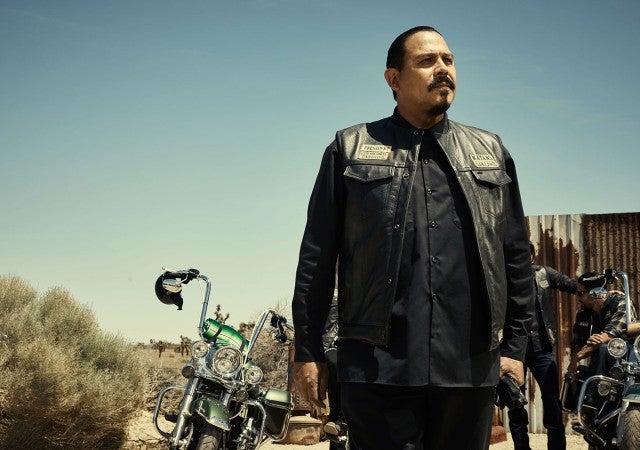
'Mayans M.C.' Star Emilio Rivera on Getting to Revive Marcus: 'I Feel Like a Little Kid' (Exclusive)

OFF THE WIRE
By
Usually, when a TV show ends, all the actors who brought that world to life bid farewell to their characters and move on. However, once in a while some actors get a second chance at bringing certain extra-special characters to life. Such was the case with Marcus Alvarez, played by Emilio Rivera, who first appeared in Sons of Anarchy and is now in Mayans M.C. 
ET spoke with "El Padrino" himself about reprising the leader of the Mexican motorcycle club and the difficult subject matter the show is looking to explore.
“When I was working in Charming, I was there [to sell] the guns, the dope, the heroin, whatever it was. Now you see that I answer to somebody,” he said in a phone interview, referring to the Mexican cartel. “You’ve always got someone above you. I don’t know about Galindo [Danny Pino], he probably answers to the devil. I don’t know. We all answer to somebody.”
True enough, unlike Sons of Anarchy, Mayans M.C. showcases the Mexican bikers’ often volatile relationship with the Galindo Cartel, headed up by Miguel Galindo south of the border, offering a very different perspective on this outlaw life.
And, as fans know, the show features a band of vigilantes called Los Olvidados (The Forgotten) led by the mysterious Adelita (played by Carla Baratta), which is primarily made up of orphaned children who wage war against the cartel. It’s disturbing to see child soldiers in masks carrying out sometimes vengeful acts, but as Rivera points out, that’s the point.
“And you know, that group Los Olvidados, that’s a real group, man. How sad and how badass that is. It goes both ways. The orphans and the cartel. That’s heavy, bro,” he reflected, before considering how some orphans might feel under these trying circumstances. “I wouldn’t even think about that. I wouldn’t have even thought about that. ‘But you know what, you killed my parents, bro, I’m out to get you.’ What a concept.”
According to the 57-year-old actor, his return to this world was made all the more exciting by introducing audiences to vibrant Latino communities created with care by a largely Latino cast and crew.
“This is the first time I’ve seen this [many] people like me on one show, you get what I’m saying? Also, behind the scenes, Kurt [Sutter, the series co-creator] made a point of that and that’s how it’s been going. It makes me proud,” he stated. “At first, I was nervous about that because SOA was so good, you know. But when I saw what they had I wasn’t worried anymore. I’m just proud... We’ve been waiting a long time for this opportunity. These guys came to play, man.”

Rivera also commented on the importance of tackling the border war, stating: “I think it’s the perfect time. They got with what’s happening right now. It’s scary but it’s happening right now.”


'Mayans M.C.'
James Minchin/FX
Now that the season is three episodes in, viewers are able to see how it’s similar to SOA and how it’s a total departure. In many ways, it’s far more topical in its subject matter, often making the violence more timely and tragic, like the burning of the two Mexicans in episode 2. Although Rivera refused to offer details on what fans can expect to see, he did promise big things are on the way.

“All the way to the last page of episode 10, I was like… ‘I can’t wait for next season now,' you dig? And I’m not the type of guy to get excited, bro,” he said. “I’m really excited about this show.”

After 25 years in the business, Rivera discussed just how special working on this show is to him.

“I’m in the last quarter of my life and it’s like, I feel like a little kid right now,” he said. “I’ve been doing this a long time. At the end of the day, it’s just a job. I love what I do. And then I come to this job and it’s like my love for acting has started all over again. It’s like I’m starting again. I can’t wait to go to work… I’ve got it pretty damn good.”

New episodes of Mayans M.C. air on Tuesdays at 10 p.m. ET/PT on FX.

RIDING FREE FROM DC

OFF THE WIRE
Your Weekly Biker Bulletin from Inside the Beltway
Your Motorcycle Riders Foundation team in Washington, D.C. is pleased to provide our members with the latest information and updates on issues that impact the freedom and safety of American street motorcyclists. Count on your MRF to keep you informed about a range of matters that are critical to the advancement of motorcycling and its associated lifestyle. Published weekly when the U.S. Congress is in session.
Motorcycle fatalities decline by 4.7% in 2018
Earlier this week, the National Highway Traffic Safety Administration (NHTSA) released the 2018 motor vehicle fatality report.  For the second year in a row, less people lost their lives on the roads across the country.  As you can see in the chart below, motorcycle fatalities declined in 4.7% from 2017 to 2018 while overall motor vehicle crashed were reduced by 2.4% while vehicle miles traveled (VMT) also increased.
Does that mean motorcyclists are doing better than the other motor vehicles on the road?  Unfortunately, we still represented 14% of traffic fatalities in 2018 according to the Fatality Analysis Reporting System (FARS) data, “New vehicles are safer than older ones, and when crashes occur, more new vehicles are equipped with advanced technologies that prevent or reduce the severity of crashes,” NHTSA Acting Administrator James Owens said in the statement. 
You can read the full NHTSA 2018 Fatality Report, 2018 Crash Stats.pdf 
MRF attends bicameral Autonomous Vehicle Legislation Meeting
During the August recess, the Motorcycle Riders Foundation partnered with Harley Davidson (H-D) and the American Motorcyclist Association (AMA) to send a joint letter outlining the priorities of the motorcycle lobbying community for any future autonomous vehicle (AV) legislation to both the minority and majority staff of the House Energy and Commerce Committee and the Senate Committee on Commerce, Science, and Transportation.  This week, the MRF, H-D and the AMA was invited to meet to further discuss the concerns and priorities of motorcyclists for any AV legislation. As you may remember during the 115th Congress, the House and Senate took two different approaches writing legislation and neither of those bills were signed into law. While the House and Senate committees are in the infancy stages of writing legislation, we are encouraged by the bicameral effort on future legislation and remain optimistic that both chambers can introduce the same legislation. The AV working group of congressional staffers spearheading this effort do not have any real time line when we may see any draft legislation out of their committees as they are still bringing in the over 100 stakeholder groups that submitted their AV priorities at the end of summer.  As always, we will keep our ear to the ground and continue to engage the appropriate congressional staff as they continue through the process to draft this necessary and comprehensive legislation to help keep not only motorcyclists but all motorists safe on our roads.
You can read our specific recommendations from the August letter below:
Rulemaking – Set new standards specific to seeing, detecting and properly reacting to motorcycles;
Testing – Ensure motorcycles are part of all testing and development procedures;
Advisory committees – Public user advisory committees should include a representative from the motorcycle community and a motorcycle manufacturer;
Consumer education – Require a public, easily accessible and searchable database where consumers can look up important safety information such as the limitations and capabilities of different products offered by AV manufacturers or service providers, as well as clarifications for marketing terms such as auto pilot, super cruise, etc. For example, the database should inform consumers what each relevant automakers’ systems Auto Pilot can and cannot do in terms of the driving task;
Safety Evaluation Reports – AV manufacturers must be required to detail and make public how their vehicles identify motorcycles among other road users. Manufacturers must also include human error analysis in safety reports; and
Crash data/reporting – AV manufacturers must report incidents between AVs and motorcycles just as they would incidents between AVs and other road users. Manufacturers must also include human error analysis in crash data and reporting.
Southbound and Down to the 2019 Mid-South M.I.L.E. conference
I’m off to Shreveport, Louisiana for the 28th Annual Mid-South M.I.L.E. (Motorcyclists Improving Legislative Effectiveness) to speak to the attendees from Arkansas, Kansas, Louisiana, Missouri, Oklahoma and Texas. If you were at MOTM 2019, you probably heard “Brick” Lindsey with ABATE of Louisiana plug that they were having bacon wrapped alligator at the event and I eagerly await to report back to you next week about my first alligator experience.
Standing Update:
We are currently at 108 cosponsors from 38 states and one territory for H. Res 255, the motorcycle profiling resolution. An additional 8 new cosponsors have joined since our last update including our first member from Virginia and Indiana. The map below shows which states have at least one lawmaker signed on as a cosponsor.   Is your state not filled in yet?  Check with the D.C.  team about how we can work together to secure cosponsors from your state. 
Click HERE to see if your member has signed on to H. Res 255.
 

Ride Free,
Tiffany
About Motorcycle Riders Foundation
The Motorcycle Riders Foundation (MRF) provides leadership at the federal level for states’ motorcyclists’ rights organizations as well as motorcycle clubs and individual riders. The MRF is chiefly concerned with issues at the national and international levels that impact the freedom and safety of American street motorcyclists. The MRF is committed to being a national advocate for the advancement of motorcycling and its associated lifestyle and works in conjunction with its partners to help educate elected officials and policymakers in Washington and beyond.

.